
Published: July 8, 2026 | Last Updated: May 29, 2026
For decades, flying cars have been shown in science fiction movies as a symbol of the future. They appear as vehicles that can avoid traffic, travel quickly between cities, and completely change the way people move. Today, that idea is no longer only a fantasy. Advances in electric motors, battery systems, artificial intelligence, and autonomous technology have brought flying cars closer to reality than ever before.
In this guide, you will learn how flying cars work, what technologies make them possible, where the industry stands today, and what problems engineers still need to solve. Whether you are curious about future transportation or simply want to understand emerging technology, this article explains the topic in a simple and practical way.
What Are Flying Cars?
A flying car is a vehicle designed to transport people through the air while offering some features similar to traditional cars. The idea is to create a transportation system that combines road travel with short-distance air travel.
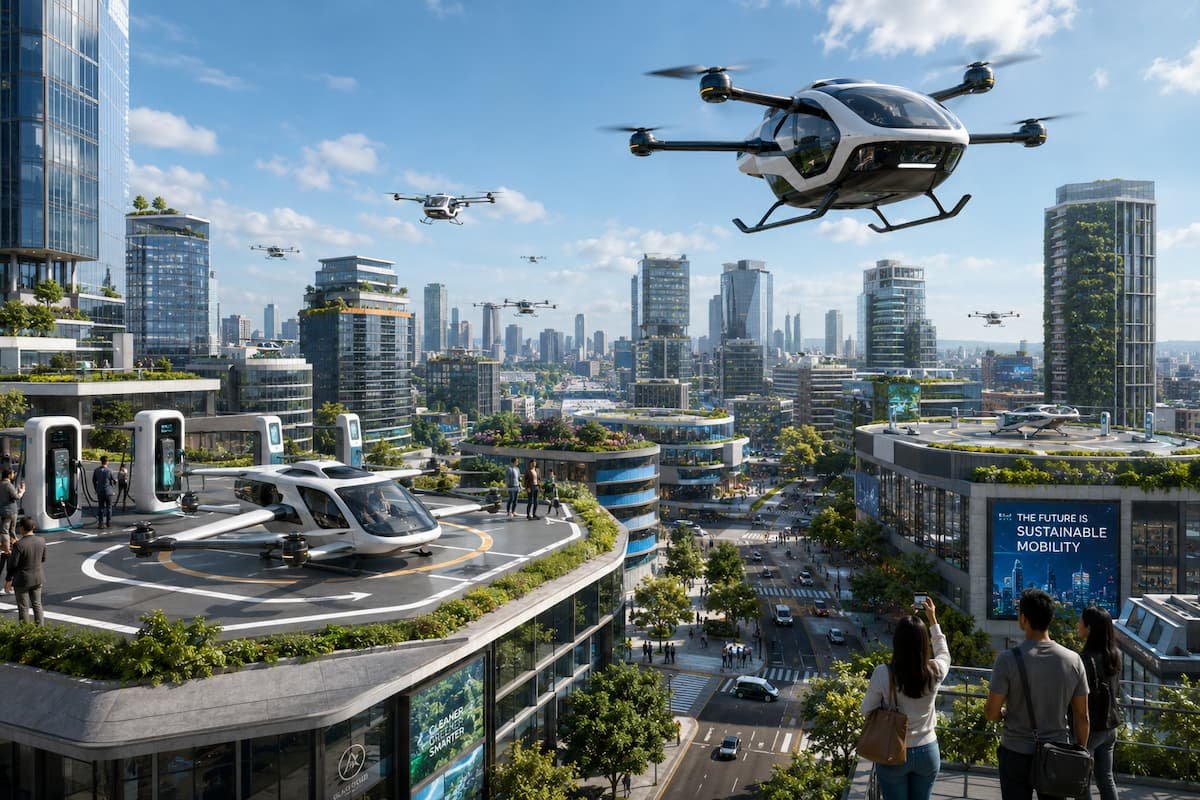
Modern flying car projects are usually different from the vehicles shown in older science fiction films. Many companies are not building traditional cars with wings. Instead, they are developing electric aircraft called electric vertical takeoff and landing vehicles (eVTOLs).
These vehicles are designed to take off and land vertically, similar to helicopters, but they aim to be quieter, cleaner, and easier to operate. Some models focus on carrying passengers between city locations, while others are designed for emergency services, cargo delivery, or airport transportation.
Flying Cars vs Traditional Aircraft
| Feature | Flying Cars (eVTOL) | Traditional Aircraft |
|---|---|---|
| Takeoff Method | Usually vertical takeoff and landing | Requires runway in most cases |
| Power Source | Mostly electric motors | Usually jet fuel or aviation fuel |
| Travel Distance | Mostly short urban trips | Short and long-distance flights |
| Noise Level | Designed to reduce noise | Usually louder |
| Main Purpose | Urban transportation and mobility services | Passenger and cargo aviation |
The term “flying car” can sometimes create confusion because many upcoming vehicles may not actually drive on roads. They are closer to small electric aircraft designed for city transportation. The goal is not necessarily to replace every car but to create another option for moving people.
How Flying Car Technology Works
Flying cars combine several advanced technologies that must work together safely. Unlike normal vehicles, they must handle both transportation on the ground and movement through the air. The basic idea is simple: electric motors provide power, sensors collect information about the environment, computers help control the vehicle, and advanced batteries store energy needed for flight.
Main Components of Flying Cars
- Electric Motors: These provide the power needed to spin propellers or rotors. Electric motors are popular because they are efficient, quieter, and easier to maintain compared with traditional engines.
- Battery Systems: Batteries store the energy needed for flight. Battery technology is one of the biggest challenges because flying requires much more energy than normal driving.
- Flight Control Computers: These systems monitor speed, altitude, balance, and movement. They help pilots or autonomous systems control the aircraft.
- Sensors: Cameras, radar, GPS, and other sensors help detect obstacles and improve navigation.
- Communication Systems: Future flying vehicles will need reliable communication with air traffic systems and other aircraft.
Simple Example: How a Flight Would Work
Imagine someone wants to travel from one part of a large city to another. Instead of sitting in traffic for one hour, they could use a small flying vehicle from a nearby landing area called a vertiport.
- The passenger enters the vehicle and selects a destination.
- The vehicle checks weather conditions, battery level, and flight restrictions.
- Electric motors lift the aircraft vertically from the ground.
- The vehicle follows a planned route through controlled airspace.
- It lands vertically at another approved location.
This sounds simple, but making every step safe and reliable requires years of engineering, testing, and regulation development.
Tip: The biggest difference between a flying car and a normal car is that mistakes in the air have much greater consequences. Safety systems must be extremely reliable before widespread use.
Understanding eVTOL Aircraft
Most modern flying car concepts use eVTOL technology. The name describes how these vehicles operate:
- Electric: Powered mainly by electric motors instead of traditional fuel engines.
- Vertical: Able to rise and land vertically without a long runway.
- Takeoff and Landing: Designed for flexible operation in urban areas.
eVTOL aircraft are considered important because cities have limited space. Building new airports inside crowded urban areas is difficult, but smaller landing locations could make short-distance air travel more practical.
Different Types of eVTOL Designs
| Design Type | How It Works | Main Advantage |
|---|---|---|
| Multirotor | Uses several small rotors similar to a large drone | Simple control and vertical flight |
| Lifting Wing | Uses wings for efficient forward movement | Better for longer trips |
| Vectored Thrust | Changes rotor direction for different flight modes | Combines hovering and airplane-style flight |
Each design has advantages and disadvantages. Multirotor systems are easier to understand but may have limited range. Wing-based designs can travel farther but require more complex engineering.
Why Are Flying Cars Being Developed?
The main reason behind flying car research is the growing challenge of urban transportation. Many cities around the world struggle with traffic congestion, crowded roads, and limited transportation options. Developers believe that short-distance air travel could provide another layer of mobility. Instead of replacing buses, trains, and cars, flying vehicles may work alongside existing transportation systems.
Problems Flying Cars Could Help Solve
- Traffic Congestion: Air routes could reduce pressure on crowded roads.
- Emergency Response: Flying vehicles could help medical teams reach locations faster during emergencies.
- Remote Access: Aircraft could improve transportation in areas with difficult road connections.
- Airport Transportation: They could provide faster travel between airports and city centers.
However, flying cars are not a complete solution for transportation problems. Cities would still need good public transportation, careful planning, and safe infrastructure.
Current Progress in Flying Car Development
Flying car technology has moved from simple concepts and prototypes into real engineering projects. Several aerospace companies, automotive companies, and technology organizations are testing eVTOL aircraft for passenger travel, delivery services, and specialized transportation.
Although some prototype vehicles have already completed test flights, commercial operation requires much more than building an aircraft. Companies must prove that their vehicles are safe, reliable, affordable, and able to operate within existing aviation systems.
What Stage Is the Technology In?
| Development Stage | Status | What It Means |
|---|---|---|
| Prototype Testing | Already happening | Companies test designs, flight systems, and performance. |
| Safety Certification | Ongoing | Aircraft must meet strict aviation standards. |
| Limited Commercial Use | Beginning stage | Early services may focus on specific routes. |
| Mass Public Adoption | Future goal | Requires lower costs, infrastructure, and public trust. |
A common misunderstanding is that flying cars will suddenly appear everywhere. In reality, transportation changes usually happen gradually. Early versions will likely operate in controlled environments, such as airport transfers or fixed city routes, before becoming widely available.
Why Progress Takes Time
Building a flying vehicle is more difficult than building a normal electric car. A car can safely stop on a road if something goes wrong. An aircraft must continue operating safely while hundreds of meters above the ground. Engineers must solve challenges related to battery power, weather conditions, air traffic management, noise reduction, and emergency procedures. Every component must be carefully tested because reliability is critical in aviation.
Key Technologies Behind Flying Cars
Flying cars depend on several advanced technologies working together. Improvements in one area often help make the entire system more practical.
1. Advanced Battery Technology
Battery performance is one of the biggest factors affecting flying cars. Electric vehicles on roads need energy to move horizontally, but aircraft need much more power to lift themselves into the air.
Modern lithium-ion batteries have improved significantly, but engineers are still researching better energy storage solutions. Future improvements could increase flight range while reducing weight.
- Higher energy density
- Faster charging systems
- Longer battery lifespan
- Improved safety features
Warning: A flying vehicle with limited battery capacity cannot simply stop and recharge anywhere. Charging infrastructure will be a major part of future air transportation.
2. Artificial Intelligence and Automation
Artificial intelligence may help flying cars operate more safely by assisting with navigation, obstacle detection, and decision-making. Future systems may include automated flight assistance similar to advanced driver assistance systems found in modern cars. However, complete autonomous passenger flights require extremely high reliability and regulatory approval.
3. Lightweight Materials
Weight is extremely important in aviation. A heavier vehicle requires more energy to fly, which reduces efficiency. Manufacturers use materials such as carbon fiber composites and advanced alloys because they provide strength without adding unnecessary weight.
4. Smart Navigation Systems
Flying cars will need accurate navigation systems to avoid collisions and follow safe routes. Unlike roads, the sky does not have visible lanes. Future urban air mobility systems may use digital flight networks that coordinate vehicles, similar to how traffic systems manage cars today.
Potential Benefits of Flying Cars
If flying cars become practical, they could change transportation in several ways. However, the benefits will depend on how responsibly cities introduce the technology.
Faster Urban Travel
One of the biggest advantages is reducing travel time. A short-distance flight could avoid road congestion and provide a more direct route between locations. For example, a trip across a large city that normally takes one hour by road might become significantly shorter using an air route.
Reduced Pressure on Roads
Growing populations put pressure on existing transportation systems. Flying vehicles could provide another option for certain types of travel. This does not mean roads will disappear. Instead, transportation networks may become more diverse, combining trains, buses, cars, bicycles, and air mobility.
Improved Emergency Services
Emergency response is one area where flying technology could provide immediate benefits. Small aircraft could potentially reach locations faster than traditional vehicles in certain situations.
Possible uses include:
- Medical transportation
- Disaster response
- Search and rescue operations
- Delivery of urgent supplies
Cleaner Transportation
Many flying car designs use electric power, which could reduce direct emissions compared with traditional fuel-powered aircraft. However, environmental benefits depend on how electricity is produced and how batteries are manufactured and recycled.
Flying Cars Compared With Other Transportation Options
| Transportation Type | Advantages | Limitations |
|---|---|---|
| Cars | Flexible and widely available | Affected by traffic congestion |
| Trains | Efficient for many passengers | Requires fixed routes |
| Helicopters | Vertical flight capability | Expensive and noisy |
| Flying Cars | Potentially fast and flexible urban travel | High cost and complex regulations |
Flying cars are not designed to replace every existing transportation method. Their most realistic role may be providing additional options for specific travel needs.
Challenges Preventing Mass Adoption
While flying cars receive a lot of attention, several major challenges must be solved before they become common.
1. High Development and Operating Costs
Aircraft require advanced materials, safety systems, and specialized maintenance. Early flying cars are expected to be expensive because production numbers will initially be low. For widespread adoption, manufacturers will need to reduce production costs and create affordable ownership or service models.
2. Battery Limitations
Battery technology remains one of the largest obstacles. Current batteries provide enough energy for some test flights, but longer trips require improvements.
Engineers must balance three important factors:
- Flight distance
- Vehicle weight
- Battery size
3. Infrastructure Requirements
Flying cars need more than roads and parking spaces. Cities may need special facilities called vertiports where vehicles can take off, land, charge, and receive maintenance. Planning these locations requires careful consideration of safety, noise, population density, and accessibility.
4. Noise Concerns
Even electric aircraft create sound from motors and moving air. If thousands of flying vehicles operate above cities, noise management will become important. Companies are designing quieter systems, but public acceptance will depend on how noticeable these vehicles become in daily life.
5. Weather Conditions
Weather affects all aircraft. Strong winds, storms, heavy rain, and poor visibility can create challenges. Flying cars will require advanced weather monitoring and safety systems before they can operate reliably.
Common Mistakes People Make About Flying Cars
- Mistake: Thinking flying cars will replace all cars soon.
Reality: They will likely begin with specific transportation uses. - Mistake: Assuming anyone can fly one without training.
Reality: Safety requirements and regulations will determine operation rules. - Mistake: Believing technology alone will solve traffic problems.
Reality: Cities need balanced transportation planning.
Safety and Regulations in Flying Car Technology
Safety is the most important factor in making flying cars a reality. Aviation has strict standards because failures can have serious consequences. Before passenger services become common, regulators must create rules covering aircraft design, pilot requirements, maintenance, communication systems, and emergency procedures.
Important Safety Features
- Backup motors and power systems
- Reliable navigation technology
- Emergency landing procedures
- Collision avoidance systems
- Regular inspections and maintenance
Future flying vehicles may include multiple layers of protection so that one failure does not immediately create danger.
Best Practice: Successful flying car systems will depend on safety-first engineering, not just speed or convenience.
The Future of Flying Cars: Are They Really Close?
Flying cars are closer to reality than they were a few decades ago, but “close” does not mean they will become common overnight. The future of this technology will depend on how quickly engineers solve technical problems and how governments create safe rules for operation.
The first generation of flying cars will likely focus on specific situations rather than everyday personal transportation. For example, they may be used for airport connections, emergency services, business travel, or transportation between nearby cities. A future where people casually order a flying vehicle from a smartphone and travel anywhere through the sky is possible, but it requires major improvements in cost, infrastructure, and public confidence.
What the Next 10–20 Years May Look Like
| Time Period | Possible Development |
|---|---|
| Near Future | More testing, certifications, and limited commercial routes. |
| Medium Term | Expansion of air mobility services in selected cities. |
| Long Term | More affordable and accessible flying transportation options. |
The growth of flying cars may follow a pattern similar to electric cars. Early electric vehicles were expensive and limited, but improvements in technology and manufacturing gradually increased adoption.
Will Everyone Own a Flying Car?
Personal ownership is possible, but it may not be the most practical model. Aircraft require maintenance, safety checks, storage space, and operational knowledge. A more realistic future may involve transportation services where people use flying vehicles when needed, similar to ride-sharing services today.
What Could Make Flying Cars Successful?
- Lower battery costs and better energy storage
- Reliable autonomous flight assistance
- Affordable maintenance systems
- Clear aviation regulations
- Public acceptance
- Well-designed urban infrastructure
What Should People Know About Flying Car Technology Today?
For most people, flying cars are still a developing technology rather than something they can buy and use immediately. However, understanding the technology helps people make realistic decisions about the future of transportation.
Things to Watch in the Coming Years
- Battery improvements: Better batteries will determine how far and how efficiently these vehicles can travel.
- Government approvals: Regulations will decide where and how flying cars can operate.
- Infrastructure growth: Cities will need landing areas and charging facilities.
- Safety records: Public trust will depend on successful testing and reliable operation.
How Consumers Can Prepare
People do not need to make major changes today. The best approach is to stay informed and understand that transportation technology usually develops step by step. Future transportation will probably include a combination of different options rather than one single replacement. Cars, trains, bicycles, public transport, and aircraft may all work together.
Environmental Impact of Flying Cars
Electric flying vehicles are often discussed as a cleaner alternative to traditional aviation. Because they use electric motors, they can reduce direct emissions during operation. However, environmental impact depends on the complete lifecycle of the vehicle. Battery production, electricity sources, manufacturing processes, and recycling systems all affect sustainability.
Potential Environmental Advantages
- Lower direct emissions during flight
- Less dependence on aviation fuel
- Possibility of using renewable electricity
- Improved efficiency for short urban trips
Environmental Challenges
- Battery production requires valuable materials
- Aircraft manufacturing uses energy and resources
- Large-scale adoption could increase electricity demand
The most sustainable transportation future will likely combine cleaner vehicles with smarter city planning and efficient public transportation.
Maintenance and Reliability Considerations
Like all vehicles, flying cars will require regular maintenance. In fact, maintenance may become even more important because aviation systems must operate under strict safety standards.
Important Maintenance Areas
| Component | Maintenance Need |
|---|---|
| Batteries | Monitoring performance, temperature, and charging cycles. |
| Electric Motors | Checking efficiency and mechanical condition. |
| Software Systems | Installing updates and security improvements. |
| Flight Controls | Regular inspection and calibration. |
Tip: Future flying vehicles will depend on software as much as mechanical parts. Keeping digital systems secure and updated will be essential.
Conclusion
Flying cars have moved beyond science fiction and entered a serious stage of technological development. Improvements in electric motors, batteries, automation, and aerospace engineering have made the idea more realistic than ever before.
However, many challenges remain. Engineers must improve battery performance, governments must create safety rules, and cities must develop suitable infrastructure. The biggest goal is not simply making vehicles fly, but creating a transportation system that is safe, practical, and useful.
The future of transportation will likely not depend on one technology alone. Flying cars may become one part of a larger system that includes electric vehicles, public transportation, and smart city solutions. For now, flying cars represent an exciting example of how innovation can transform everyday life. Understanding both their possibilities and limitations helps us see the future more realistically.
References and Further Reading
- Federal Aviation Administration (FAA) – Advanced Air Mobility information and aviation regulations:
https://www.faa.gov/ - National Aeronautics and Space Administration (NASA) – Advanced Air Mobility research:
https://www.nasa.gov/ - European Union Aviation Safety Agency (EASA) – Urban Air Mobility and aviation safety information:
https://www.easa.europa.eu/ - International Civil Aviation Organization (ICAO) – Aviation standards and future mobility topics:
https://www.icao.int/ - Massachusetts Institute of Technology (MIT) – Research and education on transportation technology:
https://www.mit.edu/

Robert Chen is a smart home technology consultant and the founder of ClarityTechHub. With over eight years of hands-on experience installing residential solar systems, configuring smart security networks, and optimizing connected home devices, Robert writes from direct practical experience. He has advised more than one hundred homeowners on energy-efficient technology upgrades and regularly tests emerging devices to evaluate real-world performance. All product recommendations and technical guides on ClarityTechHub are based on independent research and firsthand testing.