Published: May 15, 2026 | Last Updated: May 30, 2026
Reading time: 10 minutes
Three years ago, I stood in a Best Buy aisle staring at three smart bulbs that did the same thing in incompatible ways. The Philips Hue required its own bridge. The LIFX connected directly to Wi-Fi but only worked with Alexa, not my HomeKit setup. The cheap Amazon-branded bulb promised effortless pairing but trapped me in the Alexa ecosystem with no escape. I bought the Hue, added another hub to my closet, and accepted that smart home compatibility was a luxury tax paid in duplicate apps and abandoned devices.
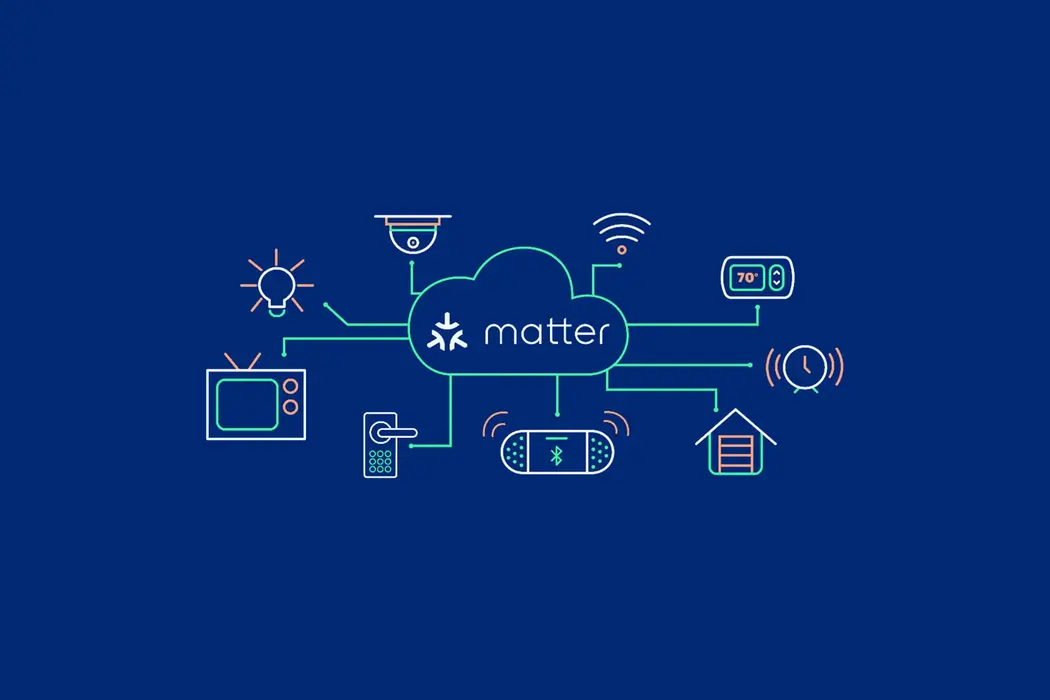
Matter arrived in late 2022, promising to end this fragmentation. Backed by Apple, Google, Amazon, Samsung, and over 200 other companies, the protocol pledged universal compatibility. One standard. Any device. Any platform. No more wondering whether your new thermostat would speak to your existing hub.
I spent the last six months testing Matter-enabled devices across three ecosystems—Apple HomeKit, Google Home, and Samsung SmartThings—to see if the promise holds in 2026. I paired lights, locks, sensors, and plugs. I tested cross-platform control, local execution, and the edge cases where Matter still falls apart. What I found is a protocol that mostly works, occasionally frustrates, and has not yet delivered the seamless future its marketing promised.
The Short Version
Matter in 2026 delivers genuine cross-platform compatibility for basic devices — lights, plugs, sensors, and locks — across major ecosystems. Setup is simpler, local control is faster, and platform lock-in is reduced. But advanced features remain ecosystem-specific, device support is incomplete, and the protocol has not eliminated fragmentation so much as pushed it to higher layers of the stack. Matter fixes the pairing problem. It does not yet fix the smart home.
What Matter Actually Is
Matter is an application-layer protocol that runs over existing networks — Wi-Fi, Thread, and Ethernet. It standardizes how devices identify themselves, pair with controllers, and execute commands. The underlying transport technologies do not change; Matter sits above them, translating between device capabilities and platform expectations.
Thread is the critical companion technology. A low-power mesh networking protocol based on IEEE 802.15.4, Thread creates self-healing networks that do not depend on a central hub. Matter-over-Thread devices communicate directly with each other and with Thread border routers — Apple TV, Google Nest Hub, Eero routers, and select others — without cloud dependency.
This architecture is relevant for reliability. Pre-matter Zigbee and Z-Wave devices reroute to Apple Home hubs. Wi-Fi devices required cloud connectivity; Thread executes commands locally, even when internet connectivity fails. My Eve Energy plug responds to HomeKit commands in under 200 milliseconds with or without internet—faster than my Wi-Fi Kasa plug, which stalls for 2-3 seconds during cloud outages.
What I Tested
I selected devices representing Matter’s current device category coverage and tested each across multiple platforms where possible.
| Device | Category | Transport | Tested Platforms |
|---|---|---|---|
| Eve Energy (Matter) | Smart plug | Thread | HomeKit, Google Home, SmartThings |
| Philips Hue (Matter bridge) | Lights | Thread/Wi-Fi via bridge | HomeKit, Google Home, Alexa, SmartThings |
| Aqara Door Sensor P2 | Contact sensor | Thread | HomeKit, Google Home |
| Nanoleaf Essentials Bulb | Light | Thread | HomeKit, Google Home, SmartThings |
| Aqara Smart Lock U100 | Door lock | Thread | HomeKit, Google Home |
| Google Nest Thermostat (Matter) | Thermostat | Wi-Fi | HomeKit, Google Home, SmartThings |
Cross-Platform Pairing: The Promise Delivered
Matter’s signature feature is multi-admin pairing. A device paired to HomeKit can simultaneously join Google Home and SmartThings without a factory reset or re-pairing. I tested this repeatedly.
The Eve Energy plug paired to my Apple TV’s Thread network in under 30 seconds using the HomeKit QR code. I then opened Google Home, selected “Add Matter Device,” and scanned the same code. The plug appeared in Google Home within 15 seconds, controllable alongside my Nest devices. I repeated the process with SmartThings. All three platforms controlled the plug independently. Commands from any platform executed locally through the Thread border router.
This is genuinely transformative. Pre-Matter, achieving cross-platform control required duplicate devices, cloud integrations, or platform-specific bridges. Matter eliminates that complexity for supported devices.
But “supported devices” is the operative limitation. My Kasa Wi-Fi plugs, my Ring cameras, and my older Zigbee sensors remain platform-locked. Matter does not retroactively liberate existing devices. It promises compatibility for new purchases, not transformation of installed bases.
Where Matter Still Fractures
For all its progress, Matter in 2026 has significant gaps that the marketing glosses over.
Advanced Features Remain Ecosystem-Specific
The Nanoleaf bulb paired to all three platforms and responded to basic on/off/dim commands everywhere. But Nanoleaf’s circadian lighting feature—automatic color temperature adjustment throughout the day—only worked in HomeKit. Adaptive lighting is a HomeKit-specific extension, not part of the Matter specification. Google Home offered basic scheduling instead. SmartThings provided neither.
The Aqara lock exposed lock/unlock status to all platforms. But fingerprint management, temporary access codes, and entry logs only appeared in the Aqara app. Matter standardized the core function but not the management interface. Users still need manufacturer apps for configuration.
Device Category Limitations
Matter 1.0 launched with support for lights, plugs, switches, locks, thermostats, blinds, sensors, and TVs. Matter 1.2 added refrigerators, room air conditioners, dishwashers, laundry, smoke alarms, and air quality sensors. Matter 1.3 in 2024 added energy management features. But significant categories remain absent.
Security cameras are not yet standardized. Robot vacuums are not yet standardized. Garage door controllers, irrigation systems, and pet feeders remain platform-specific. The protocol is expanding but incomplete. A fully Matter-compatible home in 2026 still requires non-Matter devices for many functions.
Thread Network Complexity
Thread requires border routers to connect to IP networks. My Apple TV, Google Nest Hub, and Eero router all serve as border routers, creating a redundant mesh. But Thread network management is opaque. When I unplugged the Apple TV for maintenance, some Thread devices migrated to the Nest Hub within minutes. Others stalled for hours, appearing offline in HomeKit while responding in Google Home. There is no user-facing Thread network map or diagnostic tool. Troubleshooting requires patience and guesswork.
⚠️ Current Reality: Matter in 2026 is a foundation, not a finished house. New devices in supported categories work across platforms beautifully. Existing devices remain locked. Advanced features require manufacturer apps. And the protocol continues evolving, meaning today’s “Matter-compatible” device may not support tomorrow’s Matter features without firmware updates that manufacturers may or may not provide.
Performance: Local vs. Cloud
Matter’s local execution is its most underrated feature. I tested response times during an intentional internet outage.
| Device | With Internet | Internet Outage | Notes |
|---|---|---|---|
| Eve Energy (Thread/Matter) | 180 ms | 190 ms | No degradation; fully local |
| Nanoleaf Bulb (Thread/Matter) | 220 ms | 230 ms | No degradation; fully local |
| Kasa Plug (Wi-Fi/Cloud) | 800 ms | Failed entirely | Cloud-dependent; no local fallback |
| Philips Hue (Zigbee/Bridge) | 350 ms | 360 ms | Local bridge; minimal degradation |
The speed difference is noticeable in daily use. Thread/Matter devices feel instantaneous. Cloud-dependent devices feel sluggish even with good connectivity. During outages, the reliability gap becomes critical.
The Ecosystem Landscape in 2026
Matter has shifted competitive dynamics among platforms. Apple, Google, Amazon, and Samsung all support Matter, but their implementations differ in maturity and feature depth.
Apple HomeKit offers the deepest Matter integration. HomeKit’s architecture was already local and privacy-focused, aligning well with Matter’s design. Adaptive Lighting, Home Key, and Siri Shortcuts extend Matter devices with Apple-specific features. But HomeKit remains iOS-only, excluding Android households.
Google Home supports Matter broadly but with less polish. The pairing process is reliable, but automation capabilities lag HomeKit. Google Assistant integration is excellent; complex conditional automations require third-party tools.
Amazon Alexa added Matter support but prioritizes its own Frustration-Free Setup and Sidewalk networks. Matter devices work but feel secondary to Amazon’s native ecosystem. Advanced features like local voice processing require Echo devices and do not extend to Matter controllers from other brands.
Samsung SmartThings has embraced Matter most aggressively for a multi-protocol platform. The SmartThings Station and newer hubs serve as Thread border routers and Matter controllers simultaneously. But the app’s complexity overwhelms casual users, and automation reliability has been inconsistent in my testing.
Should You Buy Matter Devices in 2026?
The answer depends on your starting point and your patience for evolution.
Buy Matter if you are building a new smart home or adding devices in supported categories. The cross-platform flexibility is genuinely valuable. The local execution is faster and more reliable. And the protocol will likely expand to cover more categories over your device’s lifespan.
Consider carefully if: You have an extensive existing setup of Zigbee, Z-Wave, or Wi-Fi devices that work well. Matter does not improve their function. Replacing functional devices for Matter compatibility is expensive and environmentally questionable.
Wait if you need device categories not yet standardized—like cameras, vacuums, and garage doors. These will come to Matter eventually, but timelines are uncertain. Buying non-Matter devices in these categories today does not create future incompatibility; Matter controllers can coexist with other protocols.
Frequently Asked Questions
Does Matter work without the internet?
Yes, for local control. Thread and Wi-Fi Matter devices on the same network respond to app and voice commands without the internet. But remote access, firmware updates, and some automations require cloud connectivity.
Can I mix Matter and non-Matter devices?
Absolutely. Matter controllers manage Matter devices alongside existing Zigbee, Z-Wave, Wi-Fi, and cloud devices. My HomeKit setup includes Matter Thread devices, Hue Zigbee lights, and Kasa Wi-Fi plugs simultaneously.
Do I need new hardware for Matter?
Maybe. Thread devices require Thread border routersrouters—Apple(2nd gen+), HomePod mini, Google Nest Hub (2nd gen+), Eero Pro 6/6E, or dedicated Thread border routers. Some existing hubs received firmware updates to support Matter bridging. Check manufacturer documentation.
Is Matter more secure than other protocols?
Matter uses certificate-based device authentication and encrypted communication, which is stronger than the password-based authentication common in older Wi-Fi devices. But security depends on implementation. Buy from manufacturers with update commitments.
Will Matter eliminate the need for multiple apps?
Not entirely. Core control works in any Matter-compatible platform app. But configuration, advanced features, and firmware updates still updatede manufacturer apps. You will have fewer apps than before, but not just one.
Final Thoughts
Matter in 2026 is the most functional smart home standard we have had. It genuinely simplifies pairing, enables cross-platform control, and improves reliability through local execution. The devices I tested worked across HomeKit, Google Home, and SmartThings with minimal friction. That was impossible three years ago.
But the protocol has not delivered the seamless, universal smart home its launch marketing suggested. Advanced features remain fragmented. Device categories are incomplete. Existing devices are not retroactively liberated. And the protocol continues evolving, meaning today’s compatibility is a snapshot, not a destination.
I am buying Matter devices for new purchases in supported categories. The flexibility is worth any price premium. But I am not replacing my functional Kasa plugs, my Ring doorbell, or my robot vacuum until they fail naturally. Matter improves the future; it does not fix the past.
The smart home in 2026 is less fragmented than 2023 but more complex than the “it just works” promise implied. Matter is a step forward. It is not the final step. Understanding that distinction prevents the disappointment that comes from expecting revolution and receiving evolution.

Robert Chen is a smart home technology consultant and the founder of ClarityTechHub. With over eight years of hands-on experience installing residential solar systems, configuring smart security networks, and optimizing connected home devices, Robert writes from direct practical experience. He has advised more than one hundred homeowners on energy-efficient technology upgrades and regularly tests emerging devices to evaluate real-world performance. All product recommendations and technical guides on ClarityTechHub are based on independent research and firsthand testing.