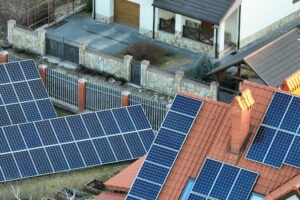
Solar panels are often promoted as a smart investment that can reduce electricity bills and provide long-term savings.
But many homeowners still have one important question.
Are solar panels actually worth it?
The answer is not the same for everyone.
While some households see significant savings, others struggle to recover the initial cost. The difference usually depends on factors like installation cost, electricity usage, location, and long-term planning.
This guide will break down the real cost versus savings of solar panels for homes so you can make a practical and informed decision.
How Solar Panels Work in Simple Terms
Solar panels convert sunlight into electricity.
This electricity can be used to power your home, reducing your reliance on traditional power sources.
If you want a deeper understanding of how this works, you can explore How Solar Energy Works at Home Beginner Guide.
The Real Cost of Installing Solar Panels
Initial Installation Cost
The biggest barrier for most homeowners is the upfront cost.
This includes:
- Solar panels
- Inverter system
- Installation charges
- Wiring and setup
The total cost can vary depending on:
- System size
- Quality of components
- Installation complexity
Maintenance Costs
Solar panels require minimal maintenance, but they are not completely maintenance-free.
Costs may include:
- Cleaning panels
- Occasional repairs
- Inverter replacement over time
Battery Storage Costs
If you want to store excess energy, you may need a battery system.
This increases the overall cost but provides backup during outages.
Understanding the Savings from Solar Panels
Reduced Electricity Bills
The main benefit of solar panels is lower electricity bills.
You generate your own power, which reduces dependence on the grid.
Long-Term Savings
Although the upfront cost is high, savings accumulate over time.
Most systems last 20 to 25 years, which allows long-term benefits.
Protection from Rising Energy Prices
Electricity prices tend to increase over time.
Solar panels help protect you from these rising costs.
Potential Increase in Property Value
Homes with solar systems may have higher resale value.
Buyers often prefer energy-efficient properties.
Real Cost vs Savings Breakdown
Short-Term Perspective
In the first few years:
- Costs are higher than savings
- Return on investment is not immediate
This is why many people feel solar panels are expensive.
Long-Term Perspective
Over time:
- Electricity savings increase
- The initial cost is gradually recovered
After the break-even point, the electricity you generate is essentially free.
Factors That Affect Whether Solar Panels Are Worth It
Your Electricity Usage
Higher electricity usage means more savings from solar panels.
Sunlight Availability
Homes in sunny areas benefit more.
Less sunlight means lower energy production.
Installation Cost in Your Area
Costs vary depending on location and service providers.
Energy Efficiency of Your Home
If your home is already energy efficient, solar panels become even more effective.
You can improve efficiency further by using smart devices. Learn more in How to Reduce Electricity Bills Using Smart Devices.
Government Incentives
In some regions, incentives or tax benefits can reduce installation costs.
Common Misconceptions About Solar Panels
Solar Panels Eliminate Electricity Bills Completely
This is not always true.
Most homes still rely partially on grid electricity.
Solar Panels Work the Same Everywhere
Performance depends on sunlight and environmental conditions.
Solar Panels Require No Maintenance
While low maintenance, they still require occasional care.
They Are Only for Large Homes
Even small homes can benefit from solar systems.
When Solar Panels Are Worth It
You Plan to Stay Long-Term
Solar panels are a long-term investment.
If you plan to stay in your home for many years, the savings are more likely to outweigh the cost.
You Have High Electricity Bills
Higher bills mean faster return on investment.
You Have Good Sunlight Exposure
More sunlight leads to higher energy production.
You Want Energy Independence
Solar panels reduce reliance on external power sources.
When Solar Panels May Not Be Worth It
You Plan to Move Soon
You may not recover the installation cost.
Your Electricity Usage Is Low
Lower usage means lower savings.
Installation Costs Are Too High
If costs are too high, the break-even period becomes too long.
Limited Sunlight
Shaded areas reduce efficiency.
How to Maximize Solar Panel Savings
Combine Solar with Smart Technology
Using smart devices can further optimize energy usage.
For example:
- Smart thermostats
- Smart lighting
This increases overall efficiency.
Monitor Energy Usage
Tracking your consumption helps you make better decisions.
Maintain Your System
Regular cleaning and maintenance improve performance.
Secure Your Energy System
A connected system should also be protected.
Follow How to Secure Your Home Wi Fi Network Step by Step Guide to keep your setup safe.
Environmental Benefits of Solar Panels
Reduced Carbon Footprint
Solar energy is clean and renewable.
Less Dependence on Fossil Fuels
This contributes to a more sustainable future.
Support for Clean Energy Transition
Using solar power supports global efforts toward sustainability.
Frequently Asked Questions
How long does it take to recover the cost of solar panels?
It usually takes several years, depending on usage and installation cost.
Do solar panels work during cloudy days?
Yes, but efficiency is reduced.
Are solar panels a good investment for small homes?
Yes, if electricity usage and sunlight conditions are favorable.
Can solar panels power a home completely?
In some cases, but most homes still use some grid electricity.
Is maintenance expensive?
No, maintenance costs are generally low.
Conclusion
Solar panels can be a valuable investment, but they are not a one-size-fits-all solution.
The real value depends on your specific situation, including your energy usage, location, and long-term plans.
While the upfront cost may seem high, the long-term savings and energy independence can make it worthwhile for many homeowners.
The key is to evaluate your needs carefully and make an informed decision.
When used correctly and combined with efficient energy practices, solar panels can be both a financial and environmental benefit.