
Published: April 29, 2026 | Last Updated: June 1, 2026
Batteries have become one of the most important parts of modern life. From smartphones and laptops to electric vehicles, solar energy storage systems, and smart home devices, batteries power much of the technology people rely on every day. As the world moves toward cleaner energy and connected living, battery usage continues to grow rapidly.
However, this growth also creates a serious challenge: what happens to batteries after they stop working?
Improper battery disposal creates environmental risks, wastes valuable materials, and increases long-term sustainability problems. Many batteries contain lithium, cobalt, nickel, lead, and other materials that can be harmful if not handled correctly. At the same time, these materials are expensive and increasingly important for future energy systems.
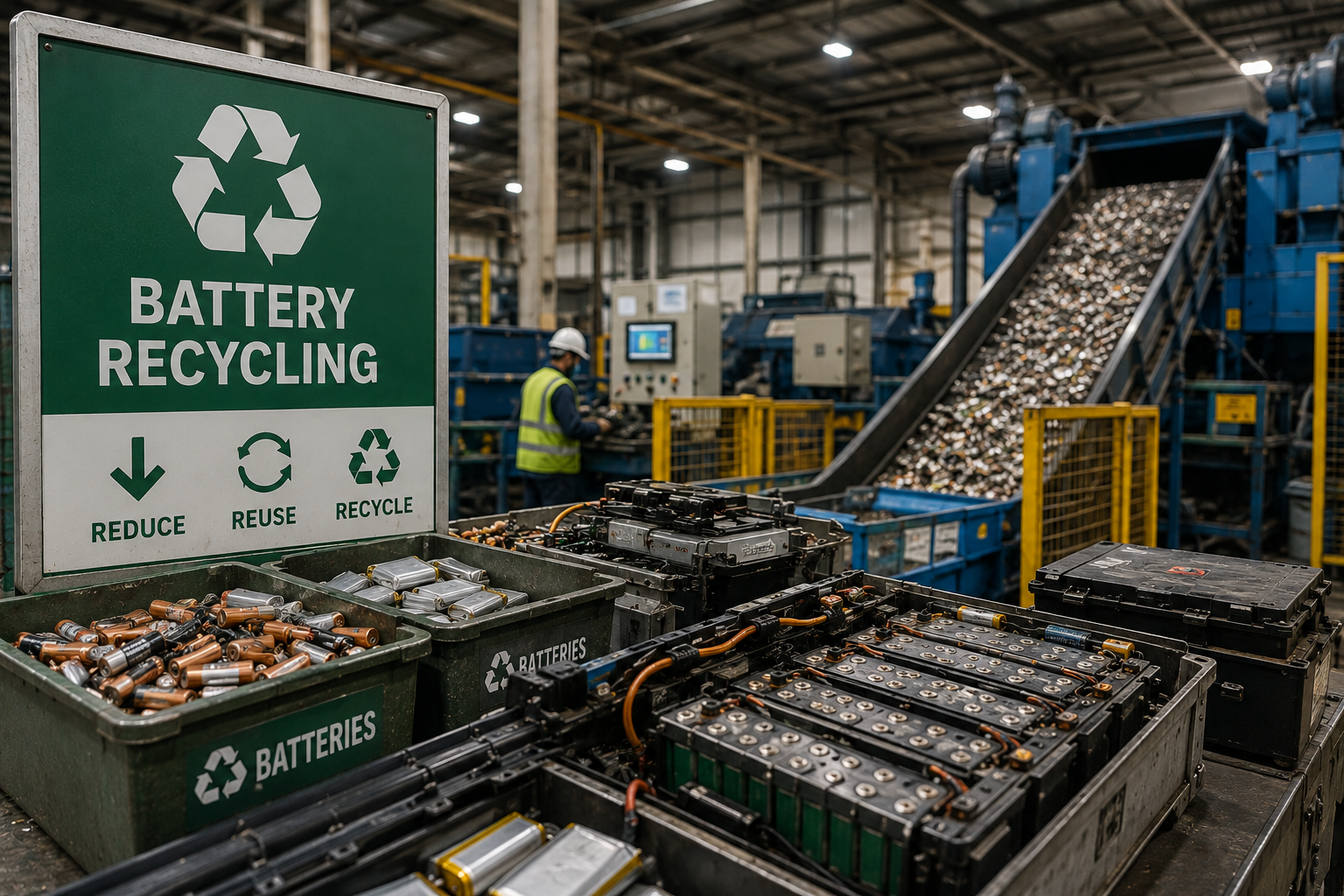
Battery recycling technology helps solve this problem by recovering valuable resources, reducing pollution, and supporting cleaner energy development. Instead of treating used batteries as waste, recycling turns them into reusable materials for future production.
As electric vehicles, renewable energy systems, and portable electronics continue expanding in 2026 and beyond, battery recycling is becoming one of the most important parts of sustainable technology.
This guide explains how battery recycling works, why it matters, and why its future importance will continue to grow.
Why Battery Recycling Matters
Modern society depends heavily on rechargeable and disposable batteries.
These include:
- smartphones
- laptops
- tablets
- smart home devices
- electric vehicles (EVs)
- solar battery storage systems
- medical devices
- industrial machinery
- wearable technology
- backup power systems
When these batteries reach the end of their life, throwing them away creates serious problems.
Risks of Improper Disposal
- soil contamination
- water pollution
- toxic chemical leaks
- fire hazards
- wasted rare materials
- increased mining demand
- landfill growth
- higher carbon emissions
Battery recycling helps reduce these risks while improving resource efficiency.
Our guide on Sustainable Technology Guide for Modern Homes explains how sustainability depends on better long-term resource management.
What Is Battery Recycling Technology?
Battery recycling technology refers to the systems and processes used to safely collect, separate, recover, and reuse materials from old batteries.
Instead of sending used batteries to landfills, recycling facilities extract valuable components for future manufacturing.
These materials often include:
- lithium
- cobalt
- nickel
- manganese
- graphite
- lead
- copper
- aluminum
This reduces the need for new raw material extraction.
Battery recycling is both an environmental solution and an economic strategy.
How Battery Recycling Works
The recycling process depends on battery type, but the general steps are similar.
1. Collection and Safe Transportation
Used batteries must first be collected safely.
This includes:
- consumer drop-off centers
- retailer recycling programs
- EV battery return systems
- industrial battery collection services
Transportation requires careful handling because damaged batteries may create fire or leakage risks.
Safety is the first priority.
2. Sorting by Battery Type
Different batteries require different recycling methods.
Examples include:
- lithium-ion batteries
- lead-acid batteries
- nickel-metal hydride batteries
- alkaline batteries
- EV battery packs
- solar storage batteries
Sorting improves recovery efficiency and prevents contamination.
3. Discharging and Dismantling
Before processing, batteries are safely discharged to remove remaining electrical energy.
They are then dismantled so valuable components can be separated.
This includes:
- outer casing removal
- cell separation
- wire and connector removal
- material classification
Large EV batteries require advanced disassembly systems.
4. Material Recovery
This is the most important stage.
Recycling facilities recover valuable metals using processes such as:
Mechanical Processing
Shredding and physical separation of materials.
Pyrometallurgy
High-temperature treatment used to extract metals.
Hydrometallurgy
Chemical liquid-based extraction that improves recovery precision.
This method is becoming increasingly important for lithium-ion batteries.
5. Reuse in New Products
Recovered materials are refined and used for:
- new EV batteries
- consumer electronics
- energy storage systems
- industrial battery manufacturing
- renewable energy infrastructure
This supports circular economy systems where fewer raw materials are wasted.
Battery Recycling and Electric Vehicles
Electric vehicles are one of the biggest reasons battery recycling is becoming critical.
EV batteries are large, expensive, and contain valuable materials.
As EV adoption grows, millions of batteries will eventually require recycling.
Our article on How Electric Vehicles Reduce Urban Pollution and Emissions explains how EV growth supports cleaner cities—but recycling is necessary to keep that progress sustainable.
Why EV Battery Recycling Matters
- reduces mining pressure
- lowers battery production costs
- improves supply chain stability
- reduces environmental damage
- supports large-scale clean transportation growth
Without recycling, EV sustainability becomes incomplete.
Battery Recycling and Solar Energy Storage
Home solar systems increasingly use battery storage for:
- backup power
- nighttime electricity use
- grid independence
- energy cost reduction
As residential battery systems grow, recycling becomes more important for long-term sustainable energy planning.
Our guide on Are Solar Panels Worth It for Homes explains how energy storage affects home solar value.
Battery recycling strengthens renewable energy systems by reducing long-term waste.
Battery Recycling and Smart Homes
Smart homes depend on batteries more than many homeowners realize.
Examples include:
- smart locks
- security systems
- backup power units
- smart sensors
- voice assistants
- wearable health devices
- Wi-Fi backup systems
As connected homes grow, battery lifecycle planning becomes part of responsible smart home management.
Our article on Ultimate Smart Home Setup Guide for Beginners explains how connected homes require smarter long-term planning.
Future Technologies Improving Battery Recycling
Battery recycling is becoming more advanced through:
Artificial Intelligence
AI helps improve:
- battery sorting
- material identification
- defect detection
- recycling efficiency
- predictive battery lifespan analysis
Our guide on The Role of AI Assistants in Future Daily Living explains how AI supports smarter technology systems.
Robotics
Robotic systems improve safe battery disassembly, especially for EV batteries where manual dismantling is dangerous and slow.
Second-Life Battery Use
Some batteries are not fully recycled immediately.
Instead, they are reused for:
- backup storage
- home energy systems
- commercial storage support
This extends battery value before final recycling.
Challenges in Battery Recycling
Despite progress, several challenges remain.
These include:
- high recycling costs
- limited collection systems
- battery transport safety risks
- complex battery designs
- lack of global recycling standards
- growing EV battery volume
- difficult lithium recovery processes
Technology improvements are helping, but large-scale infrastructure is still developing.
Quick Comparison Table: Disposal vs Recycling
| Battery Disposal | Battery Recycling |
|---|---|
| Landfill waste | Material recovery |
| Environmental pollution | Reduced contamination |
| Higher mining demand | Lower raw material extraction |
| Lost valuable metals | Reusable resources |
| Fire and leakage risks | Controlled safe processing |
| Short-term disposal solution | Long-term sustainability strategy |
Recycling creates both environmental and economic benefits.
Frequently Asked Questions
Can all batteries be recycled?
Most battery types can be recycled, but processes vary depending on the chemistry and design.
Why is lithium battery recycling difficult?
Lithium-ion batteries are complex, can be dangerous if damaged, and require advanced recovery systems for safe material extraction.
Are EV batteries fully recyclable?
Many valuable materials can be recovered, but recycling technology continues improving to increase full recovery efficiency.
Should batteries be thrown in household trash?
No. Batteries should always be taken to proper recycling collection points because improper disposal creates safety and environmental risks.
Final Thoughts
Battery recycling technology is becoming one of the most important parts of the clean energy future.
It supports:
- electric vehicles
- renewable energy systems
- smart homes
- consumer electronics
- sustainable manufacturing
- resource conservation
- lower environmental impact
As battery use continues to grow, responsible recycling becomes essential—not optional.
The future of sustainable technology depends not only on how energy is created, but also on how materials are reused.
Battery recycling turns waste into opportunity, helping modern technology become cleaner, smarter, and truly sustainable for the years ahead.

Robert Chen is a smart home technology consultant and the founder of ClarityTechHub. With over eight years of hands-on experience installing residential solar systems, configuring smart security networks, and optimizing connected home devices, Robert writes from direct practical experience. He has advised more than one hundred homeowners on energy-efficient technology upgrades and regularly tests emerging devices to evaluate real-world performance. All product recommendations and technical guides on ClarityTechHub are based on independent research and firsthand testing.