
Digital infrastructure has traditionally relied on centralized data centers and cloud platforms to process, store, and analyze information. Cloud computing became the most popular way to deploy scalable applications as network capacity grew and virtualization improved. But the rapid growth of connected devices, high-resolution sensors, self-driving systems, and interactive digital services has created new performance needs that centralized infrastructures can’t always meet.
Many emerging applications require near-real-time data processing, minimal latency, and localized decision-making capabilities. Edge computing addresses these demands by bringing computational resources closer to data sources. Instead of sending all data to distant cloud servers, processing occurs at or near the network edge—often within local data centers, telecom nodes, or embedded devices. This distributed architecture reduces latency, conserves bandwidth, and enhances operational efficiency. Understanding edge computing requires examining its architecture, performance benefits, integration with networks, and evolving role within modern digital ecosystems.
What is edge computing?
Edge computing is a distributed computing paradigm that processes computational tasks closer to data sources. Instead of relying on large central data centers, edge computing uses smaller data centers, local servers, and smart gateways to analyze data and manage tasks right where the data is generated.
Key Characteristics of Edge Computing
- Decentralized processing: Data is processed near the source rather than solely in centralized cloud servers.
- Low-latency analytics: Immediate insights can be generated to support real-time decisions.
- Bandwidth efficiency: Only necessary data is transmitted to the cloud, reducing network load.
- Integration with cloud systems: Edge devices collaborate with centralized cloud infrastructures for long-term storage and advanced analytics.
Distributed Architecture and System Design
Edge computing relies on a decentralized model where multiple edge nodes work collaboratively to optimize performance and responsiveness.
Edge Data Flow
- Data Generation: Sensors, cameras, and connected devices generate raw data.
- Local Processing: Gateways and edge nodes preprocess data to remove noise, compress payloads, or trigger immediate actions.
- Cloud Integration: Processed data is selectively sent to centralized cloud servers for storage, advanced analytics, or cross-regional collaboration.
This tiered approach balances responsiveness at the edge with centralized scalability.
Virtualization and Containers
- Lightweight container environments allow applications to run consistently across edge nodes with limited resources.
- Orchestration frameworks coordinate workload distribution, ensuring efficient resource allocation across distributed infrastructure.
Hardware Considerations
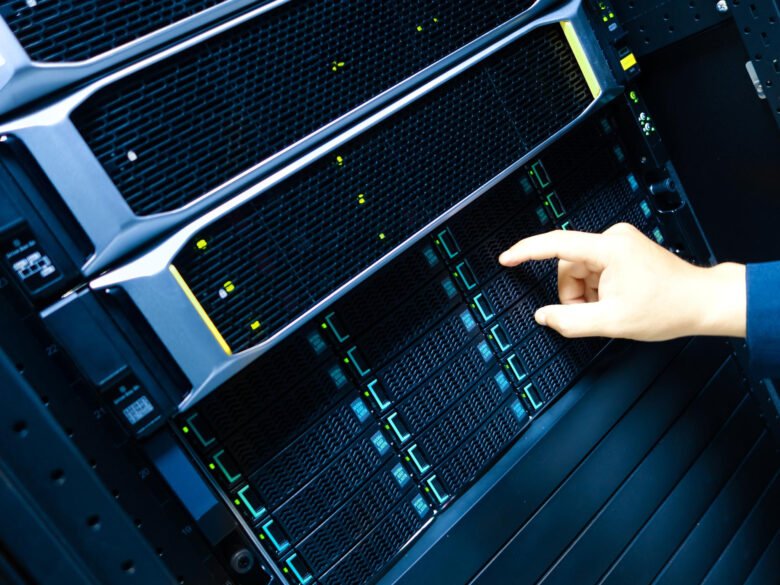
Edge nodes often operate in space- or power-constrained environments, such as telecom hubs, factory floors, or transportation terminals. Factors like temperature tolerance, power fluctuations, and physical size influence hardware selection, cooling systems, and redundancy mechanisms.
Real-Time Data Processing and Latency Optimization
Latency—the time required for data to travel between endpoints and receive a response—is critical in many modern applications.
Challenges of Centralized Processing
- Centralized cloud processing introduces delays due to long-distance data transmission.
- Applications like autonomous vehicles, remote surgery, and industrial robotics are highly sensitive to even minor latency increases.
Benefits of Edge Computing
- Reduced latency: Data is processed locally, allowing immediate decision-making.
- Real-time responsiveness: Applications can adapt rapidly to environmental changes.
- Network efficiency: Backhaul bandwidth is preserved by filtering and summarizing data before sending only relevant information to the cloud.
Latency Economics
- Centralized data centers benefit from economies of scale but increase network traffic and operational expenses for real-time tasks.
- Edge nodes lower transmission costs and improve performance, translating into operational efficiency gains in manufacturing, logistics, and service delivery.
- In digital media, faster content delivery enhances user experience and reduces abandonment rates.
Integration with Telecommunications and 5G Networks
The rollout of 5G networks has accelerated the adoption of edge computing. 5G supports network slicing, ultra-low latency, and high device density, creating an environment ideal for distributed processing.
Multi-Access Edge Computing (MEC)
- Telecom providers deploy MEC platforms within network topologies to support enterprise and consumer applications.
- Edge nodes integrated with cellular base stations enable applications like augmented reality, connected vehicles, and real-time video analytics.
- Network slicing allows performance customization for specific applications, ensuring predictable latency and bandwidth.
Role of Fiber-Optic Backhaul
- High-capacity fiber connections still link edge nodes to centralized data centers for collaboration and aggregation.
- Edge computing complements centralized processing, enabling real-time decisions while maintaining cloud-based insights.
Hybrid Cloud-Edge Models
- Cloud providers and telecom operators increasingly integrate edge services into broader cloud ecosystems.
- Developers can deploy workloads seamlessly across edge and cloud environments, ensuring both real-time responsiveness and deep computational power.
Security, Data Governance, and Operational Reliability
Distributed infrastructures introduce new security and compliance considerations.
Security Measures
- Each edge node requires robust authentication, encryption, and protective protocols.
- Device-level root-of-trust and secure execution environments prevent unauthorized access.
- Continuous monitoring ensures rapid detection of security threats.
Data Governance
- Edge processing can comply with local data residency regulations by limiting cross-border data transfers.
- Distributed storage requires consistent policy enforcement across geographically dispersed nodes.
- Centralized tools help coordinate updates, security policies, and compliance standards.
Operational Adaptability
- Edge nodes can operate autonomously during network outages or cloud failures.
- Redundant designs, failover configurations, and alternative connectivity paths enhance reliability.
- Telemetry and observability tools monitor performance, detect anomalies, and enable automated remediation without disrupting the overall system.
Applications of Edge Computing
Edge computing has transformed numerous industries by enabling real-time data processing and operational agility.
Key Use Cases
- Artificial Intelligence (AI) and Machine Learning (ML):
Local inference occurs near data sources while centralized training uses high-capacity cloud infrastructure. - Smart Cities:
Traffic management, environmental monitoring, and public safety rely on localized analytics for rapid response. - Healthcare:
Remote patient monitoring and medical imaging benefit from low-latency analysis at the edge. - Industrial Automation:
Manufacturing lines utilize predictive maintenance and quality control powered by edge nodes. - Connected Vehicles:
Autonomous and semi-autonomous vehicles leverage edge processing for navigation, safety alerts, and sensor fusion.
Energy Efficiency and Sustainability
Processing data locally reduces unnecessary network traffic and lowers overall energy consumption. While edge nodes require power and cooling, the reduction in data transmission offsets energy costs. Planning for energy-efficient hardware and monitoring aggregate power demands ensures sustainable edge deployments.
Future of Edge Computing
Edge computing is evolving as a complementary layer to centralized cloud systems rather than a replacement. The future of digital infrastructure emphasizes the following:
- Hybrid architectures: Seamless integration of cloud and edge workloads.
- Localized intelligence: Edge nodes performing real-time decision-making near data sources.
- Adaptive networks: Systems dynamically allocating resources based on performance requirements.
- AI-driven operations: Smarter edge analytics supporting predictive maintenance, quality control, and autonomous systems.
As digital ecosystems expand, the distinction between edge and core computing will become less distinct, resulting in infrastructures that are optimized for both responsiveness and computational depth.
Conclusion
Edge computing represents a transformative shift in modern digital infrastructure, addressing the challenges of latency, bandwidth, and real-time data processing. Organizations and people can run their businesses faster, more efficiently, and more reliably by moving computational tasks closer to where the data is. Integration with 5G networks, robust security practices, and hybrid cloud-edge architectures ensures that edge computing complements existing centralized systems.
As the digital ecosystem continues to expand, edge computing will play a critical role in enabling real-time analytics, adaptive decision-making, and sustainable infrastructure planning. Its adoption across industries like healthcare, autonomous transport, smart cities, and industrial automation highlights its growing significance.
FAQs
1. What is edge computing, and how is it different from cloud computing?
Edge computing processes data closer to the source, reducing latency and bandwidth usage. Cloud computing centralizes processing in remote data centers, which can introduce delays.
2. Why is low latency important in edge computing?
Low latency ensures real-time responses for applications like autonomous vehicles, remote surgery, and industrial automation, where even milliseconds matter.
3. How does edge computing improve network efficiency?
By processing and filtering data locally, edge nodes reduce the amount of information transmitted to centralized cloud servers, lowering bandwidth consumption and costs.
4. What industries benefit most from edge computing?
Key industries include healthcare, manufacturing, smart cities, AI and machine learning, autonomous vehicles, and digital media services.
5. How is data secured in edge computing environments?
Edge nodes employ encryption, authentication, device-level security, and continuous monitoring. Distributed governance ensures compliance with local data residency and regulatory requirements.