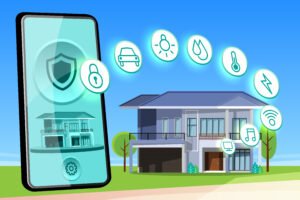
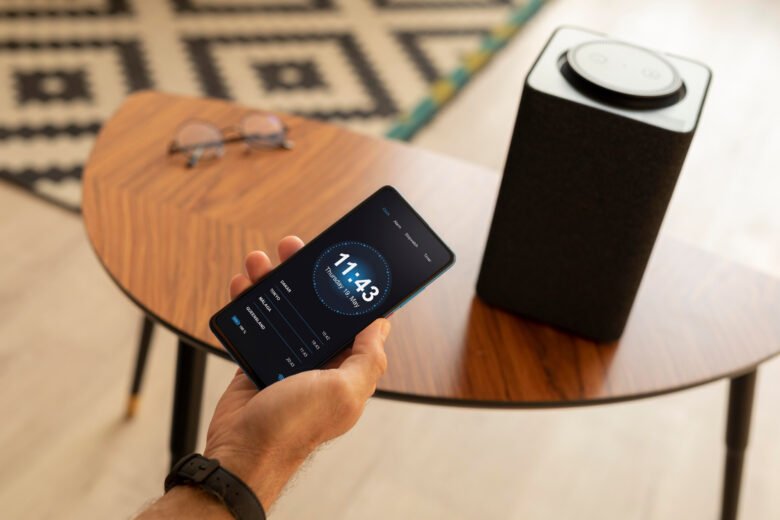
The continuous expansion of digital ecosystems has significantly reshaped how modern households operate. What were once isolated smart devices—such as thermostats, lights, cameras, and appliances—have now evolved into interconnected systems forming sophisticated smart home environments. At the center of this transformation are voice assistants, which act as intelligent control layers connecting users, devices, and cloud-based services.
Today, smart homes are no longer just collections of connected gadgets. They function as integrated digital environments governed by data privacy laws, cybersecurity frameworks, and interoperability standards. Voice assistants serve as the bridge between human intent and machine execution, coordinating device behavior, managing access, and interacting with distributed cloud infrastructure.
This article explores how voice assistants shape smart home ecosystems through architecture, interoperability, security, data management, and regulatory alignment.
1. Centralized Control and System Architecture
Traditionally, smart home devices operated independently through manufacturer-specific applications. Each device had its own interface and control mechanism, which created fragmentation and complexity.
Voice assistants have transformed this model by introducing centralized command systems. Instead of interacting with multiple apps, users can issue voice commands to a single interface. The assistant interprets the request and distributes commands across connected devices.
This creates a hierarchical architecture, where:
- Devices act as endpoints
- The voice assistant acts as a control hub
- Cloud services handle processing and coordination
While this simplifies user interaction, it also introduces dependency. If the assistant platform experiences downtime or latency, the entire system’s responsiveness may be affected. As a result, control shifts from individual device manufacturers to platform providers.
2. Protocol Translation and Interoperability
Smart homes rely on multiple communication protocols such as:
- Wi-Fi
- Zigbee
- Z-Wave
- Thread
Voice assistants act as protocol mediators, translating different communication standards into a unified command structure.
This translation layer ensures that devices from different manufacturers can work together. However, interoperability is not entirely open. It often depends on:
- Platform certification programs
- API compatibility
- Firmware alignment
Devices that do not meet platform requirements may remain isolated, reinforcing the influence of major ecosystems. In this way, voice assistants function not just as translators but also as gatekeepers of compatibility.
3. Identity Management and Access Control
Voice assistants also serve as identity and access management systems within smart homes.
Authentication methods include:
- Voice recognition
- Account credentials
- Multi-factor authentication
- Biometric verification
Once authenticated, users are granted specific permissions. For example:
- Adults may control all devices
- Children may have limited access
- Guests may receive temporary permissions
This centralized control ensures consistent security policies across all devices. Instead of managing permissions individually on each device, access is governed at the platform level.
Additionally, regulatory requirements such as data privacy laws influence how identity data is stored, processed, and monitored.
4. Cloud Dependency and Distributed Processing
Most voice assistants rely heavily on cloud computing.
Here’s how it typically works:
- A user speaks a command
- Audio is sent to cloud servers
- Natural language processing interprets the request
- Commands are sent back to devices
This model enables powerful AI capabilities but introduces several considerations:
- Latency: Delays may occur due to network dependence
- Reliability: System performance depends on cloud availability
- Data jurisdiction: Data may be stored across different countries
To address these issues, hybrid models are emerging. These combine:
- Edge computing (local processing for simple tasks)
- Cloud processing (for complex commands)
This balance improves performance while reducing reliance on remote infrastructure.
5. Cybersecurity in Voice-Controlled Systems
Voice assistants expand the attack surface of smart homes. Since they control multiple devices, a single vulnerability can impact the entire system.
Common risks include:
- Voice spoofing attacks
- Account hijacking
- API vulnerabilities
- Firmware exploits
To mitigate these risks, modern systems implement:
- End-to-end encryption
- Secure firmware updates
- Anomaly detection systems
- Multi-layer authentication
Security responsibility is shared across:
- Device manufacturers
- Platform providers
- Network operators
The voice assistant acts as the central coordination point, where all these security layers intersect.
6. Data Privacy and Lifecycle Management
Voice assistants continuously process sensitive data, including:
- Voice recordings
- Usage patterns
- Behavioral data
Managing this data responsibly is critical.
Key privacy practices include:
- Data encryption (at rest and in transit)
- Limited data retention periods
- User-controlled deletion options
- Anonymization techniques
Many platforms now provide dashboards where users can:
- Review stored data
- Delete voice recordings
- Manage permissions
Privacy regulations vary by region, so platforms must adapt dynamically to comply with different legal requirements.
7. Energy Management and Smart Integration
Voice assistants are increasingly integrated into home energy systems, including:
- Smart thermostats
- Smart meters
- Solar panels
- Battery storage systems
They allow users to control energy usage through simple voice commands while also supporting automation.
For example:
- Adjusting temperature based on occupancy
- Scheduling appliances during off-peak hours
- Responding to utility demand signals
This transforms voice assistants into energy management intermediaries, connecting households with broader energy grids.
8. Standardization and Ecosystem Evolution
The smart home industry is moving toward standardization to reduce fragmentation.
Initiatives like universal connectivity standards aim to:
- Improve device compatibility
- Reduce vendor lock-in
- Enhance user experience
Voice assistants are central to these efforts, as they:
- Support emerging standards
- Integrate multiple ecosystems
- Provide unified control
However, full standardization remains a work in progress, as companies continue to differentiate their platforms.
9. Scalability and Multi-Device Coordination
Modern smart homes may include dozens of connected devices. Managing them requires:
- Device grouping
- Scene automation
- Conditional triggers
- Synchronized responses
Voice assistants handle this complexity by:
- Discovering new devices automatically
- Managing command sequences
- Preventing conflicts between devices
For example, a single command like “Good night” can:
- Turn off lights
- Lock doors
- Adjust temperature
- Activate security systems
Scalability depends on:
- Network bandwidth
- Processing power
- Platform efficiency
10. Regulatory Compliance and Governance
Voice assistants operate within evolving regulatory environments that cover:
- Data protection
- Consumer rights
- Accessibility
- Product safety
Compliance features include:
- Consent management systems
- Transparency dashboards
- Audit logs
- Accessibility enhancements
For instance:
- Speech recognition must support diverse accents
- Users must be informed about data usage
- Systems must meet safety standards
As regulations evolve, voice assistant platforms must continuously adapt, embedding compliance into their architecture.
Conclusion
Voice assistants have become the central intelligence layer of modern smart homes. They simplify user interaction while managing complex backend processes involving connectivity, security, data processing, and regulatory compliance.
Their role extends far beyond convenience. They:
- Coordinate multiple devices
- Enforce security and access controls
- Enable energy optimization
- Bridge local systems with global cloud infrastructure
However, this centralization also introduces challenges related to privacy, security, and platform dependency. As smart home ecosystems continue to grow, the effectiveness of voice assistants will depend on their ability to balance performance, interoperability, and responsible data governance.
FAQs
1. What is the main role of a voice assistant in a smart home?
A voice assistant acts as a central control system that interprets user commands and coordinates actions across connected devices. It simplifies interaction while managing complex automation processes behind the scenes.
2. Are voice assistants secure to use?
Modern voice assistants include strong security features such as encryption, authentication, and anomaly detection. However, users should also follow best practices like enabling multi-factor authentication and updating devices regularly.
3. Do voice assistants always require the internet?
Most advanced features rely on cloud processing, but many newer systems support limited offline functionality through edge computing for basic commands.
4. How do voice assistants handle privacy?
Voice assistants use encryption and data management policies to protect user data. Many platforms allow users to review and delete stored voice recordings and control data usage settings.
5. Can different smart devices work together through a voice assistant?
Yes, voice assistants enable interoperability by translating different communication protocols. However, compatibility depends on whether devices are supported by the platform.
6. Do voice assistants help save energy?
Yes, when integrated with smart thermostats and energy systems, voice assistants can optimize energy usage by automating schedules and responding to real-time conditions.