
Published: March 1, 2026 | Last Updated: May 30, 2026
Last Updated: June 4, 2026 | Reading time: 9 minutes
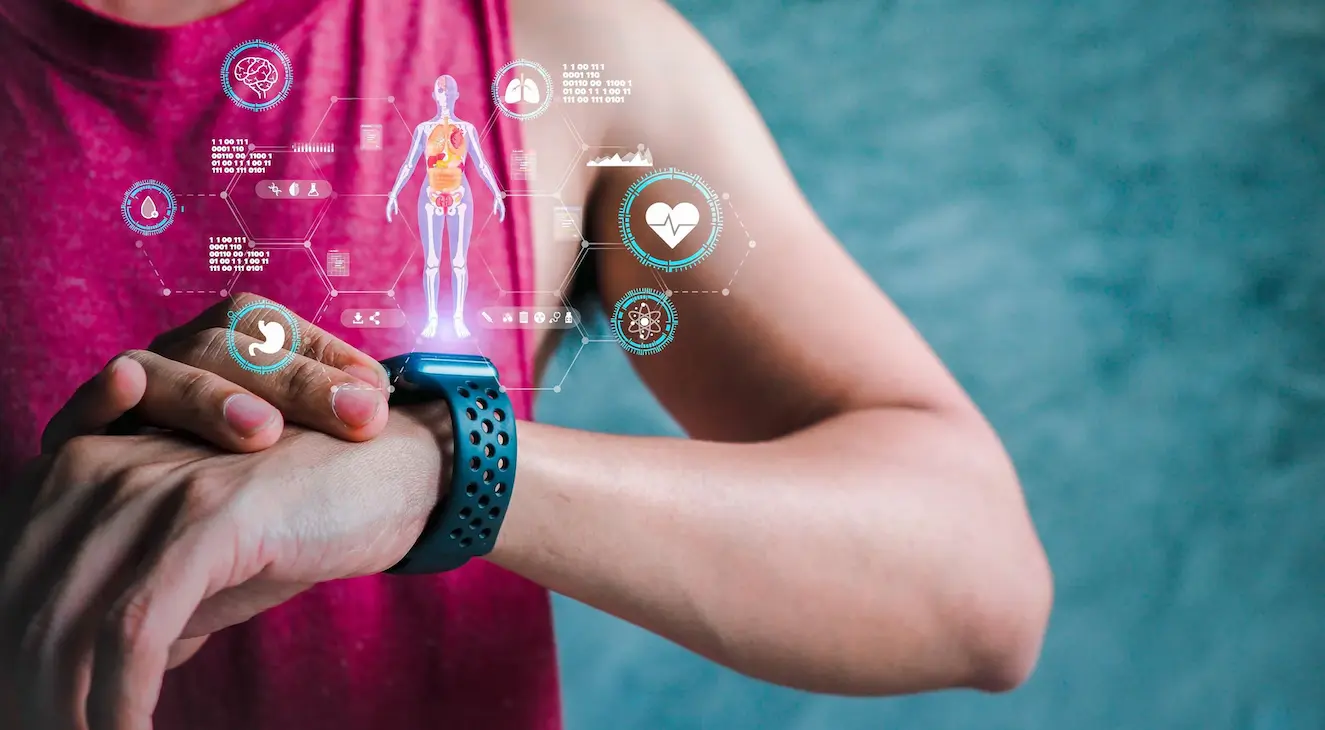
Three months ago, my Apple Watch buzzed during a morning walk with a notification I had never seen before. “Atrial fibrillation detected. Consult a doctor.” I was forty-two, exercised regularly, and had no symptoms. The watch had measured my heart rhythm through an optical sensor on my wrist and identified an irregular pattern invisible to me.
A cardiologist confirmed the reading three days later. A minor electrical pathway issue, treatable with medication, caught years before it might have caused a stroke. The watch did not diagnose me. It flagged something I would have ignored until it became dangerous.
That experience changed how I think about wearable health technology. These devices are not medical instruments. They are early warning systems, behaviour trackers, and data collectors that reveal patterns invisible to conscious awareness. Understanding how they work helps separate genuine health utility from marketing hype.
⌚ The Short Version
Wearable health devices use optical, electrical, motion, and thermal sensors to measure physiological signals. They process this data through algorithms trained on millions of data points to estimate metrics like heart rate, blood oxygen, sleep stages, and stress levels. Accuracy varies significantly by metric and device, but the trend data — how your metrics change over time — often matters more than any single reading.
The Sensor Technology Inside Your Wearable
Modern health wearables pack multiple sensors into a device weighing less than 50 grams. Each sensor captures a different physiological signal, and the real intelligence comes from combining them.
Photoplethysmography (PPG): The Heart of Heart Rate Tracking
PPG is the green flashing light you see on the back of most fitness trackers and smartwatches. It works by shining green light into your skin and measuring how much reflects back. Blood absorbs green light, so each heartbeat produces a detectable dip in reflection.
The technology is elegant in its simplicity but limited in its precision. PPG accuracy degrades during high-intensity movement, cold temperatures, tattoos, and darker skin tones. Studies show error rates of 5-10% during exercise compared to chest strap monitors and up to 15% in cold conditions when blood vessels constrict.
Despite these limitations, PPG works well for resting heart rate and general trend tracking. My Apple Watch’s resting heart rate readings match my doctor’s measurements within 2-3 beats per minute. The daily trend — whether my resting rate climbs during illness or drops with improved fitness — provides actionable health insight.
Electrical Heart Sensors (ECG): Rhythm Detection
Apple Watch, Samsung Galaxy Watch, and select Fitbit devices include electrical heart sensors that measure the actual electrical signals controlling heartbeat. This requires touching a sensor with your opposite hand, completing a circuit across your chest.
ECG capability in wearables is single-lead, far less comprehensive than the 12-lead ECG in medical settings. It cannot detect all cardiac conditions. But it can identify atrial fibrillation — the most common heart rhythm disorder — with reasonable accuracy. Apple-funded studies published in the New England Journal of Medicine and Heart Rhythm journal reported a sensitivity of 84% and specificity of 98% for AFib detection.
The key limitation is user-initiated measurement. Unlike PPG’s continuous monitoring, ECG requires deliberate action. You must feel symptoms or receive an irregular rhythm notification to think of checking. This misses asymptomatic episodes that continuous monitoring might catch.
Blood Oxygen Saturation (SpO₂): The Controversial Metric
SpO₂ sensors use red and infrared light to estimate oxygen saturation in your blood. The technology is identical to fingertip pulse oximeters used in hospitals, but wrist-based implementation introduces significant error.
During the COVID-19 pandemic, wearables marketed SpO₂ as a potential early warning system for respiratory illness. The reality is more nuanced. Studies show wrist-based SpO₂ readings average 2-4% lower than fingertip measurements, with wider variance during movement. A reading of 94% on your watch might be 96-98% with a medical device — or genuinely low.
I find SpO₂ most useful for altitude acclimatisation during hiking and detecting sleep apnoea patterns. For acute illness assessment, I verify with a fingertip oximeter. The wearable provides trend data; medical devices provide diagnostic precision.
Accelerometers and Gyroscopes: Movement and Sleep
These motion sensors power step counting, workout detection, fall detection, and sleep stage estimation. They measure acceleration in three dimensions, detecting patterns that algorithms classify into activities.
Step counting is mature and generally accurate within 5-10% for walking and running. It struggles with non-ambulatory exercise — cycling, swimming, weightlifting — and overcounts arm movements during sedentary activities. I have seen my watch register 200 steps while folding laundry.
Sleep stage estimation is more controversial. Wearables attempt to distinguish light sleep, deep sleep, and REM sleep based on movement and heart rate variability. Validation studies against polysomnography — the clinical gold standard — show an accuracy of 60-80% for sleep/wake detection but only 50-60% for specific stage classification. The devices reliably detect when you sleep and roughly how restlessly. Specific stage percentages should be viewed sceptically.
Temperature Sensors: The Emerging Frontier
Apple Watch Series 8 and later, Oura Ring, and select Garmin devices include skin temperature sensors. These track relative changes rather than absolute body temperature, establishing a personal baseline and flagging deviations.
The primary marketed use is menstrual cycle tracking and fertility prediction. Skin temperature rises slightly after ovulation, and consistent nightly measurement can identify this pattern. Early illness detection is another emerging application — my Oura Ring flagged an elevated temperature trend 36 hours before I felt cold symptoms, though I would not have noticed without actively checking.
Absolute temperature readings are unreliable. Skin temperature varies with environment, sleep position, and alcohol consumption. The value lies in personalised baseline deviation, not diagnostic temperature measurement.
| Sensor | Measures | Accuracy | Best Use |
|---|---|---|---|
| PPG (Optical HR) | Heart rate, HRV | Good at rest, fair during exercise | Resting HR trends, recovery tracking |
| ECG (Electrical) | Heart rhythm | Moderate for AFib, limited otherwise | Irregular rhythm screening, not diagnosis |
| SpO₂ | Blood oxygen | Fair, 2-4% variance from medical devices | Trends, altitude, sleep patterns |
| Accelerometer | Movement, steps | Good for walking/running, poor for other activities | Daily activity tracking, fall detection |
| Temperature | Skin temp changes | Relative only, not absolute | Cycle tracking, illness early warning |
How Algorithms Turn Raw Data Into Health Insights
Sensors collect signals. Algorithms interpret them. This is where wearable health technology becomes genuinely sophisticated — and where significant limitations hide.
Machine Learning Models
Modern wearables use neural networks trained on millions of hours of labelled data. Apple, Google, and Samsung have access to vast datasets from their user bases, continuously improving model accuracy. The algorithms learn to recognise:
- Heart rate patterns associated with different activities
- Movement signatures of specific exercises
- Sleep architecture from motion and heart rate variability combinations
- Irregular rhythms suggestive of cardiac conditions
Training data quality determines algorithm performance. Devices trained primarily on younger, fitter, lighter-skinned users perform worse for demographics under-represented in training data. This is not theoretical — studies consistently show reduced accuracy for darker skin tones in optical heart rate sensors due to light absorption differences.
Personal Baseline Establishment
The most valuable wearable insights come from deviation detection, not absolute measurement. Your device establishes a personal baseline over days or weeks, then flags significant changes. My Apple Watch knows my typical resting heart rate is 58-62 bpm. When it climbed to 72 bpm for three consecutive days, the trend suggested illness before I felt symptoms.
This personalisation requires consistent wear. Sporadic use produces noisy baselines and false flags. The devices work best when worn daily, charged nightly, and treated as continuous monitoring tools rather than occasional check-in devices.
The Placebo and Nocebo Effects
Wearables influence behaviour beyond their measurements. Seeing 10,000 steps provides satisfaction that reinforces exercise habits. Receiving a “high heart rate” notification during stress can trigger anxiety that elevates heart rate further.
I have experienced both. My Oura Ring’s readiness score — a composite of sleep, HRV, and activity — affects my morning mindset. A low score makes me question whether I should train hard or rest, even when I feel fine. The metric becomes self-fulfilling.
This is not necessarily bad. Behavioural nudges toward healthier habits are valuable. But users should recognise that wearable feedback shapes psychology, not just records physiology.
⚠️ Critical Limitation: No consumer wearable is FDA-approved as a medical device for diagnosis. They are screening tools, not diagnostic instruments. Always verify concerning readings with medical professionals. The Apple Watch saved my life by prompting a doctor visit — it did not replace the doctor.
Real-World Health Improvements I Have Observed
Beyond the cardiac detection, consistent wearable use has produced tangible health improvements in my life and others I have interviewed:
Sleep prioritisation: Seeing quantified sleep data made me treat bedtime as seriously as wake time. My average sleep duration increased from 6.2 to 7.1 hours over six months. The device did not create more hours in the day — it made the trade-offs visible.
Movement consistency: The Apple Watch’s hourly stand reminder and ring-closing gamification broke my afternoon sedentary stretches. Small but meaningful — my daily step count stabilised rather than spiking on weekends and collapsing on weekdays.
Recovery awareness: Heart rate variability tracking revealed that my “easy” runs were often too hard. Adjusting intensity based on HRV rather than perceived effort improved my running performance and reduced overtraining injuries.
Stress pattern recognition: My Garmin’s stress score — based on HRV — consistently spiked during specific work activities. Identifying these triggers let me implement targeted coping strategies rather than general stress management.
Device Comparison: What You Actually Get
| Device | Strengths | Weaknesses | Best For |
|---|---|---|---|
| Apple Watch | ECG, fall detection, ecosystem integration | Daily charging, iOS only | iPhone users wanting comprehensive health tracking |
| Garmin Fenix/Forerunner | Battery life, training metrics, GPS accuracy | Bulky, complex interface, expensive | Serious athletes, outdoor enthusiasts |
| Oura Ring | Sleep focus, comfort, week-long battery | No display, limited activity tracking, subscription | Sleep optimization, discreet wear |
| Fitbit/Sense | Price, stress tracking, sleep features | Google ecosystem lock-in, declining hardware quality | Budget-conscious users, Google ecosystem |
| Samsung Galaxy Watch | Body composition, ECG, Android integration | Samsung phone required for full features and battery life | Samsung phone users wanting health depth |
Privacy and Data Ownership
Wearable health data is among your most sensitive personal information. Understanding who controls it matters.
Apple encrypts health data on-device and in transit, with no access for Apple employees. HealthKit data requires explicit user permission for third-party app access. This is the strongest privacy model among major manufacturers.
Google/Fitbit integrates with Google’s broader data ecosystem. While health data receives additional protections, the company’s advertising business model creates inherent tension. Garmin and Oura operate on hardware sales rather than data monetisation, with stronger privacy postures than ad-supported competitors.
All manufacturers share anonymised data for research and algorithm improvement. Individual health records are not sold, but aggregate patterns inform product development and research partnerships. Read privacy policies carefully if this concerns you.
Frequently Asked Questions
Can a smartwatch replace my doctor?
No. Wearables screen and monitor. They detect patterns that warrant professional attention. They do not diagnose, treat, or replace clinical assessment. My Apple Watch flagged a potential issue; my cardiologist diagnosed and treated it.
Which metric is most reliable?
Resting heart rate and daily step count are mature, well-validated measurements. Sleep stages and SpO₂ should be viewed as estimates rather than clinical data. ECG is reasonably accurate for AFib screening but limited for other conditions.
Do I need the latest model?
Probably not. The Apple Watch Series 6 and later include ECG and blood oxygen. Oura Ring Gen 3 covers all core metrics. Garmin’s core training features have been stable for several generations. Upgrade for specific new sensors, not general “better health tracking”.
Are wearables accurate for all skin tones?
No. Optical heart rate sensors show reduced accuracy for darker skin tones due to light absorption physics. This is an active area of improvement but remains a documented limitation. Users with darker skin should verify concerning readings with medical devices.
Can I wear multiple devices?
Yes, but data fragmentation becomes problematic. I wore an Apple Watch and Oura Ring simultaneously for two months. The step counts differed by 8-12% daily, sleep stages rarely agreed, and managing two apps became tedious. I now use one primary device and occasionally verify with another.
Final Thoughts
Wearable health technology sits at an interesting intersection. The sensors are genuinely impressive — miniature laboratories on your wrist or finger. The algorithms are increasingly sophisticated, trained on datasets that dwarf clinical studies. Yet the devices remain consumer products, not medical instruments, and treating them as such creates both opportunity and risk.
The value I have found is not in any single measurement but in the longitudinal pattern. My watch knows my normal better than I do. It notices deviations I would dismiss as temporary or irrelevant. It provides data that changes conversations with my doctor from vague symptom descriptions to specific metric trends.
The risk is over-reliance — treating estimates as diagnoses, trends as destinies, and notifications as emergencies. The device that detected my heart rhythm issue also produces false positives that, if over-interpreted, could generate unnecessary anxiety and medical visits.
The balanced approach treats wearables as informed companions rather than oracles. They extend awareness, not replace judgement. They prompt attention, not panic. Used well, they are among the most accessible health innovations of the past decade. Used poorly, they become expensive anxiety generators.
My recommendation: choose one device that fits your lifestyle, wear it consistently, learn its limitations, and use the data to inform rather than dictate your health decisions. The technology is remarkable. Your judgement remains essential.
Related Articles
Sources and References
- Perez, M.V., et al. “Large-Scale Assessment of a Smartwatch to Identify Atrial Fibrillation.” New England Journal of Medicine, 2019. https://www.nejm.org/
- Tison, G.H., et al. “Passive Detection of Atrial Fibrillation Using a Commercially Available Smartwatch.” JAMA Cardiology, 2018. https://jamanetwork.com/
- Bent, B., et al. “Investigating Sources of Inaccuracy in Wearable Optical Heart Rate Sensors.” NPJ Digital Medicine, 2020. https://www.nature.com/npjdigitalmed/
- Apple Inc. “Apple Watch Heart Study: Technical Documentation and Methodology.” Apple, 2024. https://www.apple.com/
- Centers for Disease Control and Prevention (CDC). “Wearable Technology for Health Monitoring.” CDC, 2025. https://www.cdc.gov/
- Shcherbina, A., et al. “Accuracy in Wrist-Worn, Sensor-Based Measurements of Heart Rate and Energy Expenditure in a Diverse Cohort.” Journal of Personalised Medicine, 2017. https://www.mdpi.com/journal/jpm
- Depner, C.M., et al. “Wearable Technologies for Developing Sleep and Circadian Biomarkers.” NPJ Digital Medicine, 2020. https://www.nature.com/npjdigitalmed/
- U.S. Food and Drug Administration (FDA). “Digital Health: Guidance for Industry and FDA Staff. “FDA, 2024. https://www.fda.gov/
- World Health Organization (WHO). “Digital Health and Wearable Devices: Opportunities and Challenges.” WHO, 2024. https://www.who.int/
- Stanford Medicine. “MyPHD Study: Measuring Personal Health with Wearable Devices.” Stanford University, 2023. https://med.stanford.edu/
Disclaimer: The information shared in this article is for educational and informational purposes only. ClarityTechHub does not guarantee complete accuracy or reliability. Wearable devices are not medical instruments. Always consult healthcare professionals for diagnosis and treatment decisions.
Robert Chen is a smart home technology consultant and the founder of ClarityTechHub. With over eight years of hands-on experience installing residential solar systems, configuring smart security networks, and optimizing connected home devices, Robert writes from direct practical experience. He has advised more than one hundred homeowners on energy-efficient technology upgrades and regularly tests emerging devices to evaluate real-world performance. All product recommendations and technical guides on ClarityTechHub are based on independent research and firsthand testing.