
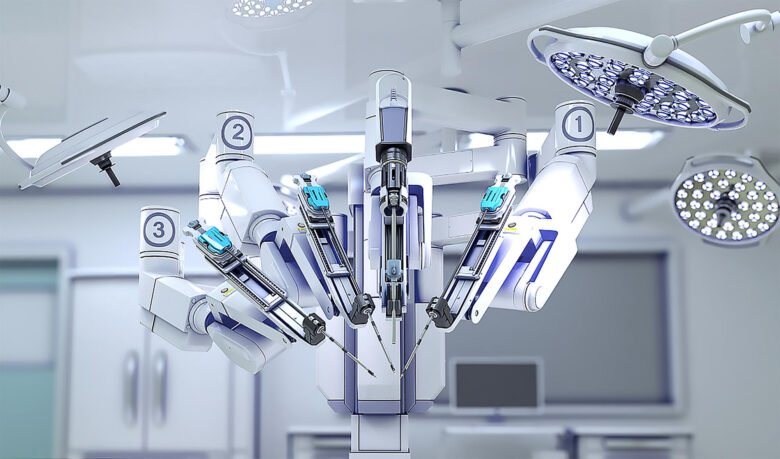
Robotics has evolved from isolated automation systems into a broad technological ecosystem that significantly impacts multiple sectors, including advanced manufacturing and modern healthcare. With advancements in sensors, artificial intelligence (AI), machine vision, and adaptive control systems, robots can now perform tasks with unprecedented precision, flexibility, and reliability.
Today, robotics is no longer limited to repetitive assembly-line tasks. Instead, it supports complex, adaptive operations, reshaping workflows, organizational structures, and workforce dynamics. Its convergence with data analytics, cloud platforms, and connected systems positions robotics as a structural component of modern digital infrastructure. Understanding robotics requires examining its technological foundations, functional integration, and broader economic and institutional implications.
Robotics in Modern Manufacturing Systems
Manufacturing was among the earliest adopters of robotics, especially in automotive, electronics, and consumer goods production. Early robotic systems were primarily used to perform repetitive, high-precision tasks such as welding, painting, and material handling. These robots operated in enclosed spaces with preprogrammed instructions, exhibiting limited environmental awareness and adaptability.
Advanced Robotics: Collaborative Robots (Cobots)
Modern robotics has introduced collaborative robots, or cobots, designed to work safely alongside human workers. Unlike traditional industrial robots, cobots use advanced sensors and real-time monitoring to dynamically adjust their movements, making them suitable for mixed-mode production lines.
Key features of cobots include the following:
- Force and proximity sensors: Prevent accidental collisions with human workers.
- Adaptive motion algorithms: Adjust speed and trajectory based on environmental feedback.
- Ease of programming: Enable workers without deep technical expertise to operate and reconfigure robots.
These features allow manufacturing facilities to combine automation with human judgment, improving both efficiency and workplace safety.
Robotics for Quality Assurance
Robotics has also revolutionized quality control processes in manufacturing. Machine vision systems, integrated with robotic platforms, provide high-resolution monitoring of products to detect the following:
- Surface defects or cracks
- Dimensional inaccuracies
- Misalignments or assembly errors
By analyzing this data in real time, robotic systems can immediately correct errors, reducing dependence on post-production inspections. This improves consistency, reduces waste, and enhances customer satisfaction, especially in high-volume manufacturing.
Predictive Maintenance and Smart Manufacturing
Robots now operate as part of connected manufacturing ecosystems:
- Operational data is transmitted to centralized analytics platforms.
- Predictive maintenance algorithms detect early signs of mechanical wear.
- Process optimization ensures energy efficiency and higher throughput.
Integration with technologies like digital twins allows manufacturers to simulate operations virtually before deployment, reducing downtime and improving decision-making.
Robotics in Healthcare: Precision and Adaptability
Healthcare robotics operates in environments with higher complexity and stricter safety requirements than manufacturing. Clinical settings demand precision, sterility, and patient-specific adaptability, which robotic systems now increasingly provide.
Surgical Robotics
Robotic surgical systems have transformed procedures requiring high dexterity and visualization:
- Tremor filtering enhances hand stability for delicate operations.
- Minimally invasive techniques reduce patient trauma and recovery time.
- Surgeons gain enhanced visualization through 3D cameras and magnified imaging.
These advancements expand the capabilities of healthcare providers while improving patient safety and procedural outcomes.
Rehabilitation Robotics
Rehabilitation robots assist patients recovering from neurological or musculoskeletal injuries:
- Provide controlled, repeatable exercise patterns.
- Monitor patient progress through real-time data collection.
- Enable therapists to personalize treatment plans based on measurable metrics.
For patients with stroke, spinal injuries, or joint replacements, robotic assistance accelerates recovery while ensuring safe and consistent movements.
Hospital Logistics Automation
Autonomous mobile robots (AMRs) optimize internal hospital operations:
- Transport medications, lab samples, and supplies efficiently.
- Reduce the burden of repetitive transport tasks on clinical staff.
- Navigate dynamic environments using real-time mapping and sensors.
This automation allows healthcare professionals to focus more on direct patient care rather than logistical tasks.
Laboratory and Imaging Robotics
Robotics improves laboratory and imaging workflows by:
- Automating sample processing to reduce errors.
- Enhancing image acquisition efficiency in radiology and pathology.
- Standardizing procedures in high-volume settings, increasing both accuracy and throughput.
While these systems do not replace clinical judgment, they support professionals by streamlining routine tasks, improving overall productivity.
Technological Foundations of Modern Robotics
The functional expansion of robotics relies on key technological advances:
- Sensors: Provide spatial awareness, object recognition, and force detection.
- Artificial Intelligence: Enables adaptive decision-making based on environmental inputs.
- Control Systems: Transitioned from rigid instructions to learning-based adaptive control.
- Machine Learning Algorithms: Optimize motion trajectories, energy consumption, and task sequencing.
These technologies allow robots to respond intelligently to dynamic environments in both manufacturing and healthcare.
Integration with Digital Systems
Modern robotics is increasingly connected to broader digital infrastructures:
- In manufacturing, robots integrate with ERP and production monitoring systems.
- In healthcare, robotics interacts with EHRs, hospital workflow software, and patient monitoring systems.
This integration ensures that robotic actions align with organizational workflows, resource planning, and operational priorities.
Cybersecurity Considerations
Connected robotics introduces potential vulnerabilities:
- Unprotected systems can lead to unauthorized access to production data or patient records.
- Effective security measures include encryption protocols, access control, and continuous network monitoring.
- Regular audits and updates are crucial for safeguarding sensitive information.
Workforce Transformation and Skill Development
Robotics affects workforce dynamics across both sectors:
Manufacturing Workforce
- Routine tasks are increasingly automated, reducing demand for manual labor.
- New roles emerge in robot programming, system maintenance, data analytics, and supervision.
- Training focuses on mechatronics, digital literacy, and robotics integration, emphasizing technical and analytical skills.
Healthcare Workforce
- Surgical teams require expertise in robotic operation, workflow coordination, and instrument handling.
- Support staff manage system maintenance and integration with hospital software.
- Automation frees healthcare professionals to focus on patient evaluation, care planning, and clinical decision-making.
Skills Redistribution
Robotics redistributes responsibilities rather than eliminating jobs:
- Workers transition from physical labor to cognitive and technical roles.
- Interdisciplinary skills combining mechanical knowledge, programming, and domain expertise are in high demand.
Economic and Organizational Implications
Robotics impacts capital investment, supply chains, and operational strategies:
- Deployment costs include robotics hardware, installation, software integration, and training.
- Long-term ROI stems from higher productivity, quality improvements, and operational flexibility.
- Supply chains adapt to support precision actuators, advanced sensors, and semiconductor controls.
Infrastructure Adaptations
- Manufacturing plants adopt modular robotic cells for flexible production layouts.
- Healthcare facilities design surgical and treatment areas optimized for robotic workflows.
- Lifecycle considerations include maintenance, software updates, and cybersecurity costs.
Regulatory and Ethical Considerations
Robotics operates under strict regulatory and ethical standards:
- Safety standards govern operating parameters, fail-safes, and emergency shutdowns.
- Healthcare ethics include patient consent, data privacy, and liability management.
- Manufacturing regulations address worker safety, environmental impact, and product quality.
Policymakers evaluate labor displacement, equitable access, and economic impact, striving to balance innovation with societal responsibility.
The Future of Robotics
Robotics represents a structural evolution toward digitally integrated operational systems:
- Robotics will increasingly serve as a core component of institutional infrastructure.
- Organizations will gain enhanced efficiency, precision, and flexibility.
- Workforce roles will evolve toward high-value, decision-centric tasks, leveraging automation to handle repetitive or physically demanding work.
The adoption of robotics is not merely a technological upgrade; it is a long-term transformation in how manufacturing and healthcare organizations operate.
FAQs
1. What is the difference between industrial robots and collaborative robots?
Industrial robots are designed for isolated, repetitive tasks and require safety barriers. Collaborative robots (cobots) can safely work alongside humans, adapting their actions based on sensor input.
2. Can robotics replace healthcare professionals?
No. Robotics enhances precision, efficiency, and safety but does not replace clinical judgment or patient care responsibilities.
3. What types of skills are needed to work with modern robotics?
Skills include robotics engineering, mechatronics, programming, data analysis, AI integration, and domain-specific expertise in manufacturing or healthcare.
4. How does robotics impact operational expenses?
While initial investments can be high, robotics improves long-term ROI through increased productivity, consistency, reduced errors, and efficient resource utilization.
5. Are robotic systems safe for hospital and manufacturing environments?
Yes, when properly implemented. Safety relies on sensors, monitoring, fail-safes, and adherence to regulatory standards and ethical protocols.