Lighting design has undergone a profound transformation with the integration of digital controls, network connectivity, and advanced sensor technologies. Traditional lighting systems were primarily designed for manual operation, offering limited flexibility and minimal interaction with other building systems.
Smart lighting systems, on the other hand, use automation, data analytics, and communication protocols to provide responsive, energy-efficient lighting in homes, businesses, and factories. As urban development increasingly emphasizes sustainability and digital transformation, smart lighting plays a critical role in optimizing resource use while enhancing occupant comfort and overall building performance.
Core Architecture and Technological Components
Smart lighting systems are built around LED luminaires, control modules, sensors, and communication interfaces, combining these components to deliver advanced functionality.
Key Components
LED Technology:
-
- Forms the foundation of most smart lighting systems.
- Offers high energy efficiency, long lifespan, and precise dimming capabilities.
- Generates less heat than conventional lighting, ensuring faster response to control signals.
Control Modules:
-
- Act as the central hub for lighting networks.
- Can operate locally or connect to cloud-based platforms for centralized management.
- Supports multiple communication protocols, including DALI, Zigbee, Bluetooth Low Energy, and Wi-Fi, enabling bidirectional data exchange between luminaires and control systems.
Sensors and Detectors:
-
- Occupancy Sensors: Detect movement or presence to enable automated switching and dimming based on room activity.
- Ambient Light Sensors: Measure natural light levels and adjust artificial lighting to maintain consistent brightness.
- Environmental Sensors: Integrate with HVAC and other building systems to optimize energy use holistically.
User Interfaces:
-
- Provide access to configuration settings and real-time monitoring.
- Allow building managers to control zones via software dashboards.
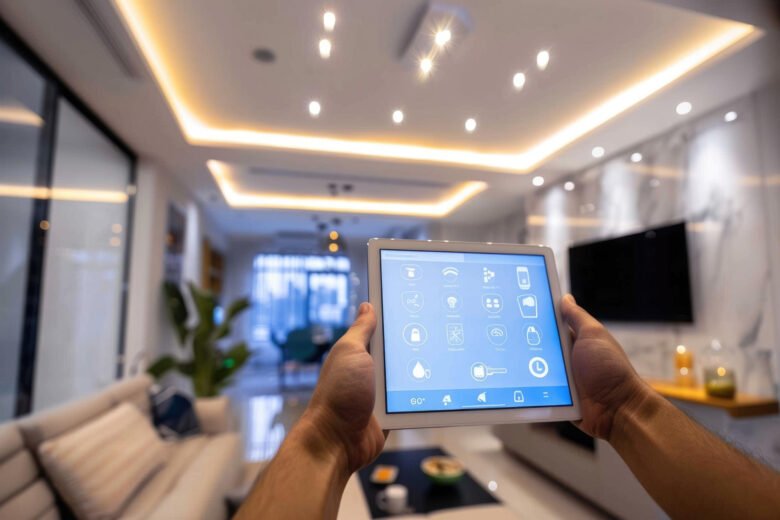
- Enable occupants to adjust settings through wall panels or mobile apps, ensuring scalability and flexibility across different building types.
Energy Efficiency and Sustainability Outcomes
Energy efficiency remains a primary driver for adopting smart lighting systems. Lighting can account for a significant portion of electricity use in commercial and institutional buildings.
Strategies for Energy Savings
Adaptive Dimming and Occupancy-Based Controls:
-
- Reduce unnecessary energy use during periods of inactivity.
- Automatically adjust brightness according to room occupancy and activity.
Daylight Harvesting:
-
- Sensors continuously measure natural light and adapt artificial lighting accordingly.
- Reduces reliance on electrical lighting during daylight hours, particularly in spaces with extensive window exposure.
Integration with Renewable Energy:
-
- Aligns lighting loads with solar generation or battery storage availability, enhancing energy efficiency and supporting broader decarbonization strategies.
Performance Monitoring:
-
- Provides data on energy consumption patterns.
- Enables building operators to identify inefficiencies and implement corrective measures.
- Supports compliance with green building standards and sustainability certifications.
Occupant Comfort and Adaptive Environments
Beyond energy efficiency, smart lighting enhances the overall occupant experience by offering adaptable illumination settings.
Enhancing Comfort
Tunable White Lighting:
-
- Adjusts color temperature throughout the day to support natural circadian rhythms.
- Cooler light tones in the morning promote alertness, while warmer tones in the evening foster relaxation.
Dimming Capabilities:
-
- Customizes brightness levels based on specific tasks and environments.
- Reduces eye strain in offices, classrooms, and healthcare settings.
Safety and Security:
-
- Automated pathway illumination reduces accident risks at night.
- Emergency lighting systems integrate with central controls for reliable activation during power outages or fire incidents.
Data-Driven Optimization:
-
- Monitors occupancy patterns to adjust lighting schedules dynamically.
- Creates environments that adapt to real human activity while maintaining functional performance.
Integration with Building Management Systems (BMS)
Smart lighting is most effective when integrated with broader building management systems, enabling holistic energy management.
Advantages of Integration
Collaborative Energy Management:
-
- Occupancy detection can simultaneously adjust lighting and HVAC systems to optimize overall energy consumption.
Centralized Control Dashboards:
-
- Provide visibility across multiple zones.
- Allow operators to monitor system health, identify failing devices, and apply firmware updates remotely.
Scalability:
-
- Large commercial campuses can monitor multiple floors or buildings through a unified platform.
- Modular deployment allows phased installation without disrupting existing systems.
Cybersecurity Considerations:
-
- Secure authentication protocols and encrypted communication protect against unauthorized access.
- Ensures operational continuity as lighting becomes part of the Internet of Things (IoT) ecosystem.
Economic and Operational Implications
Smart lighting systems offer significant financial and operational benefits beyond direct energy savings.
Cost Savings and ROI
Reduced Maintenance Expenses:
-
- Long-lasting LED fixtures lower replacement frequency and labor costs.
- Automated monitoring detects issues before they escalate into system failures.
Lifecycle Value:
-
- Despite a higher initial investment, smart lighting demonstrates long-term ROI.
- Energy savings, reduced maintenance, and improved asset management contribute to financial efficiency.
Flexibility and Adaptability:
-
- Digital controls allow reprogramming of lighting zones without major rewiring.
- Supports evolving occupancy patterns and tenant requirements in commercial properties.
Data-Driven Facility Management:
-
- Analytics reveal peak occupancy times, guiding staffing and resource allocation decisions.
- Integration of lighting performance with broader building metrics supports informed operational planning.
Regulatory and Standardization Considerations
Building codes, energy standards, and interoperability guidelines support the adoption of smart lighting.
Key Standards and Guidelines
Energy Efficiency Regulations:
-
- Ensure compliance with lighting performance, automatic shutoff, and daylight-responsive controls.
- Digital monitoring simplifies reporting and verification.
Standardization for Interoperability:
-
- Common communication protocols reduce compatibility issues between devices from different manufacturers.
- Facilitates long-term scalability and protects investments in building modernization.
Safety Standards:
-
- Address electrical safety, fire resistance, and electromagnetic compatibility.
- Ensure reliable operation in various building environments.
Integration with Urban Infrastructure:
-
- Street lighting networks may interface with occupancy sensors or environmental monitoring systems.
- Enables collaboration between public infrastructure and private buildings.
Conclusion
Smart lighting systems are a combination of energy efficiency, digital connectivity, and environmental performance in modern buildings. Their architectural design, intelligent functionality, and integration with broader building systems enhance both operational efficiency and occupant comfort.
As cities and commercial buildings increasingly adopt sustainable, digitally connected infrastructures, smart lighting emerges as a core component of modern building design, transforming lighting from a basic utility into a connected, responsive, and energy-conscious system.
FAQs
1. What is a smart lighting system?
A smart lighting system combines LED technology, sensors, and digital controls to provide adaptive, energy-efficient lighting that can be automated, monitored, and managed remotely.
2. How do smart lighting systems save energy?
They reduce energy consumption through occupancy-based controls, adaptive dimming, daylight harvesting, and integration with renewable energy sources.
3. Can smart lighting improve occupant comfort?
Yes. Tunable white lighting, dimming capabilities, and data-driven adaptive schedules support natural circadian rhythms, reduce eye strain, and enhance safety.
4. How do smart lighting systems integrate with building management systems?
They communicate with HVAC, security, and energy management platforms, allowing coordinated control, energy optimization, and centralized monitoring.
5. Are smart lighting systems cost-effective?
Despite higher upfront costs, they deliver long-term ROI through energy savings, reduced maintenance, improved operational efficiency, and potential government incentives.