Published: May 7, 2026 | Last Updated: May 30, 2026
Reading time: 10 minutes
My Ring Video Doorbell 3 lasted two years before I actively disliked it. Not because it failed — it powered on, detected motion, and sent notifications. But the 1080p footage that looked sharp in 2023 appeared muddy in 2026 next to modern alternatives. Night vision turned every visitor into a grainy silhouette. The subscription I paid monthly felt increasingly like rent on footage I already owned. The vertical field of view, which is adequate for standing adults, does not capture packages that are left directly below the lens.
I did not plan to upgrade. The Ring worked. But a package theft in January — captured in enough detail to confirm a theft but not enough to identify the thief — pushed me to evaluate what two years of technological advancement had produced. The answer was significantly more than I expected.
I tested three replacements over eight weeks, installed on my actual doorframe, facing my actual street, and recording my actual visitors. This is not a spec comparison. It is a field report from someone who has answered the door through an app hundreds of times and knows which features matter in daily use versus marketing materials.
The Short Version
Two years of doorbell camera advancement produced meaningful improvements in image quality, field of view, local storage, and subscription models. The Aqara G4 emerged as my replacement choice—1620p resolution, local storage option, HomeKit Secure Video support, and no mandatory subscription. But the upgrade decision depends on what your current camera fails at. Image quality, package detection, privacy, and ongoing cost are the variables that actually matter.
What Two Years Changed
Doorbell cameras in 2023 were primarily cloud-dependent 1080p devices with basic motion detection. The 2026 landscape differs in four specific ways:
Resolution: 2K (1440p) and 3K (1620p) are now standard in mid-range models. The difference is not marketing fluff — facial features, license plates, and package labels become readable at distances where 1080p produces blurs.
Aspect ratio: Tall 3:4 or 1:1 ratios have replaced wide 16:9. A taller view captures the full person from head to toe while showing the porch floor where packages sit. My Ring’s 16:9 cropped visitors at the knees and missed the ground entirely.
Local storage: SD card slots and home NAS integration have proliferated. You can now record footage without monthly fees, though cloud backup for critical events remains advisable.
Subscription pressure: Ring and Nest still push subscriptions aggressively. But competitors like Aqara, Reolink, and Eufy offer meaningful functionality without ongoing payments.
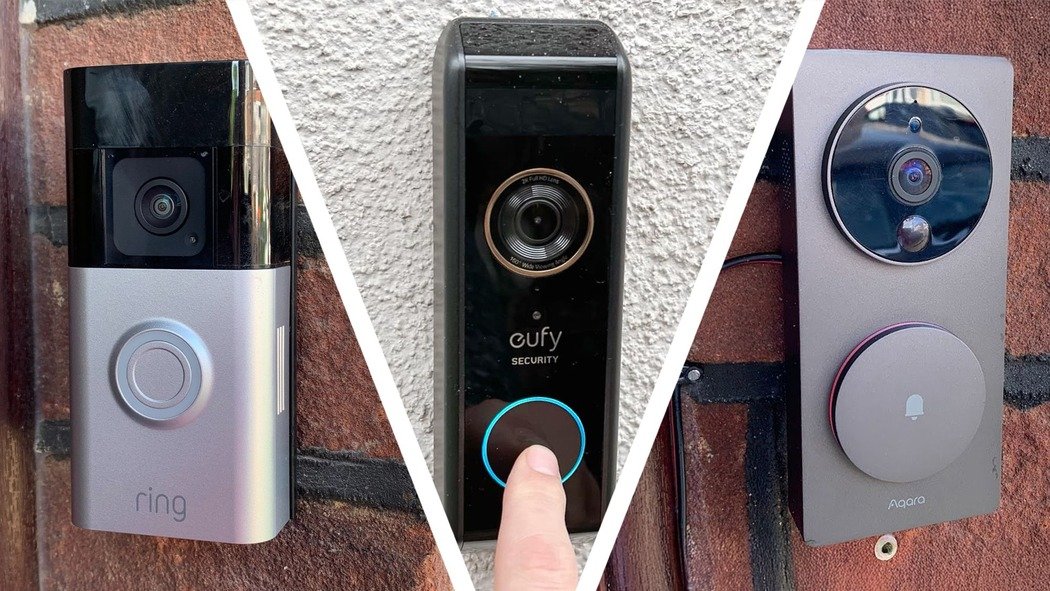
The Three Contenders
| Camera | Price | Resolution | Storage | Subscription |
|---|---|---|---|---|
| Aqara Video Doorbell G4 | $200 | 1620p (3K) | SD card + HomeKit Secure Video | Optional ($3/month for extended) |
| Reolink Video Doorbell PoE | $150 | 2560×1920 | SD card + Reolink NVR | None required |
| Ring Battery Doorbell Pro | $230 | 1536p | Cloud only | Required ($4/month) |
Image Quality: Day and Night
I mounted all three cameras sequentially on my doorframe and recorded identical scenes: visitors at 6 feet, 12 feet, and 20 feet; packages on the porch; nighttime with street lighting; and nighttime without.
The Aqara G4’s 1620p sensor produced the clearest daylight footage. At 12 feet, I could read a license plate. At 6 feet, facial features were distinct enough for identification. The 3:4 aspect ratio showed the full visitor and the porch floor—critical for package monitoring. Night vision used a combination of infrared and ambient light, producing color-accurate images where the ring showed only grayscale shadows.
The Reolink PoE matched Aqara’s daylight clarity and exceeded it in low light thanks to its larger sensor and continuous power. But the PoE requirement meant running Ethernet cable to my doorframe—feasible during construction, difficult as a retrofit. I used a powerline adapter as a workaround, which added complexity and a potential failure point.
The Ring Battery Doorbell Pro improved on my old Ring 3 but remained the weakest of the three. The 1536p resolution was better than 1080p but soft compared to true 2K/3K sensors. Night vision was improved with color night vision in ambient light, but infrared-only mode still produced grainy results. The 1:1 aspect ratio was a genuine improvement over 16:9, matching Aqara’s vertical coverage.
Package Detection: The Real Test
Package detection is where doorbell cameras prove their value. I tested each camera with deliveries from USPS, UPS, FedEx, and Amazon over two-week periods.
The Aqara G4 uses on-device AI for person, pet, vehicle, and package detection. Alerts arrived within 3 seconds of package placement. False positives were minimal—one alert triggered by a neighbor’s dog and none by passing cars. Package detection required the camera to see the object for 5 seconds before alerting, preventing false triggers from brief shadows.
The Reolink offered the most configurable detection zones and sensitivity. But package detection was less reliable — it frequently classified packages as “vehicle” or “person” depending on the delivery person’s position. The NVR interface for reviewing footage was powerful but complex, requiring more technical comfort than typical users possess.
The Ring package alerts were accurate when they arrived, but they were frequently delayed by 10-30 seconds. On three occasions, the delivery person had already left before the alert reached my phone. Ring’s cloud processing introduces latency that local processing avoids.
Storage and Privacy
This concern was my primary motivation for leaving Ring. I did not want my front door footage stored on Amazon’s servers, subject to their policies, and accessible to law enforcement without my direct knowledge.
The Aqara G4 stores footage locally on an SD card and optionally in Apple HomeKit Secure Video. HomeKit encrypts footage with keys held on my devices, not Apple’s servers. Law enforcement requests would require my device access, not a cloud subpoena. The SD card provides 7 to 30 days of continuous recording, depending on card size and resolution.
Reolink stores to an SD card or local NVR with no cloud requirements. This is the most private configuration—footage never leaves my network. But it requires technical setup and provides no off-site backup if the camera or NVR is stolen or damaged.
Ring stores everything in the cloud. The subscription includes 180 days of video history, which is convenient. But the privacy trade-off is explicit and non-negotiable. Ring’s Neighbors app and law enforcement partnerships add surveillance dimensions that some users find unacceptable.
⚠️ Privacy Reality: Local storage protects against corporate access and broad surveillance. But it does not protect against targeted theft of your recording device. For critical security, consider a hybrid approach: local primary storage with encrypted cloud backup for events you specifically flag.
Subscription Math Over Five Years
| Camera | Initial Cost | 5-Year Subscription | Total 5-Year Cost |
|---|---|---|---|
| Aqara G4 | $200 | $0 (or $180 with extended) | $200-$380 |
| Reolink PoE | $150 + $30 (SD card) | $0 | $180 |
| Ring Battery Pro | $230 | $240 | $470 |
The Ring’s total cost is 2.6x the Reolink and 2.4x the Aqara without an extended subscription. This amount is not trivial over a device’s lifespan. The subscription model shifts cost from upfront to ongoing, making the initial purchase feel cheaper while extracting more over time.
Installation and Power
The Aqara G4 offers battery or wired power. I used the existing doorbell wiring from my Ring, which provided continuous power without battery anxiety. Battery-only operation claims 4 months but drops to 6-8 weeks with heavy traffic and cold weather.
The Reolink PoE required the most effort. I used a Powerline Ethernet adapter to avoid running cable through walls. It works but adds a wall wart and potential network complexity. For new construction or renovations, PoE is ideal. For retrofits, it is a barrier.
The Ring Battery Pro is the easiest to install—remove the old doorbell, mount the bracket, and attach the device. Battery life is the ongoing tax. Charging every 2-3 months means removing the doorbell, bringing it inside, and leaving your door unwatched for hours.
Frequently Asked Questions
Is 2K/3K resolution necessary for a doorbell camera?
For identification and evidence, yes. 1080p captures that something happened. Higher resolution captures who did it and what they took. The difference matters when you need to provide footage to police or insurance.
Can I use doorbell cameras without subscription?
Increasingly yes. Aqara, Reolink, Eufy, and others offer local storage with full functionality. Ring, Nest, and Arlo require subscriptions for video history and advanced features. Check before buying.
Does HomeKit Secure Video work well?
It works for basic recording and alerts. But Apple’s 10-day limit and iCloud storage requirements (200GB plan minimum for one camera) mean it is not truly free. The privacy benefits are real; the cost shift is subtle.
What about two-way audio quality?
All three cameras offered functional but not excellent two-way audio. A lag of 1-2 seconds makes natural conversation difficult. I use two-way audio primarily to tell delivery drivers where to leave packages, not for extended dialogue.
Should I wait for newer models?
Doorbell cameras are mature technology. Incremental improvements will continue—better AI, longer battery life—but the current generation represents a significant leap over 2023-era devices. If your current camera frustrates you, upgrade now rather than waiting for marginal improvements.
Final Thoughts
I installed the Aqara G4 permanently after testing. The image quality improvement over my old Ring is immediately visible. The vertical field of view captures packages the Ring missed. Local storage with HomeKit integration satisfies my privacy concerns without sacrificing functionality. And the five-year cost is half what continued Ring ownership would require.
But the upgrade was not purely rational. My Ring worked. It notified me of visitors. It recorded events. The replacement addressed specific frustrations — image quality, privacy, and subscription fatigue — that accumulated over two years until they outweighed the inertia of staying put.
The doorbell camera market in 2026 offers genuine choice. You can prioritize image quality, privacy, ease of use, or low ongoing cost. You cannot optimize all simultaneously. Understanding your primary frustration — what your current camera fails at — determines which contender deserves your doorframe.
For me, it was privacy and image quality in equal measure. The Aqara delivered both. Your door, your visitors, and your concerns may lead elsewhere. But if you are still using a 2023-era doorbell camera, the upgrade case is stronger than incremental. Two years of advancement produced meaningful, visible, daily improvements. That is rare in consumer technology.

Robert Chen is a smart home technology consultant and the founder of ClarityTechHub. With over eight years of hands-on experience installing residential solar systems, configuring smart security networks, and optimizing connected home devices, Robert writes from direct practical experience. He has advised more than one hundred homeowners on energy-efficient technology upgrades and regularly tests emerging devices to evaluate real-world performance. All product recommendations and technical guides on ClarityTechHub are based on independent research and firsthand testing.